
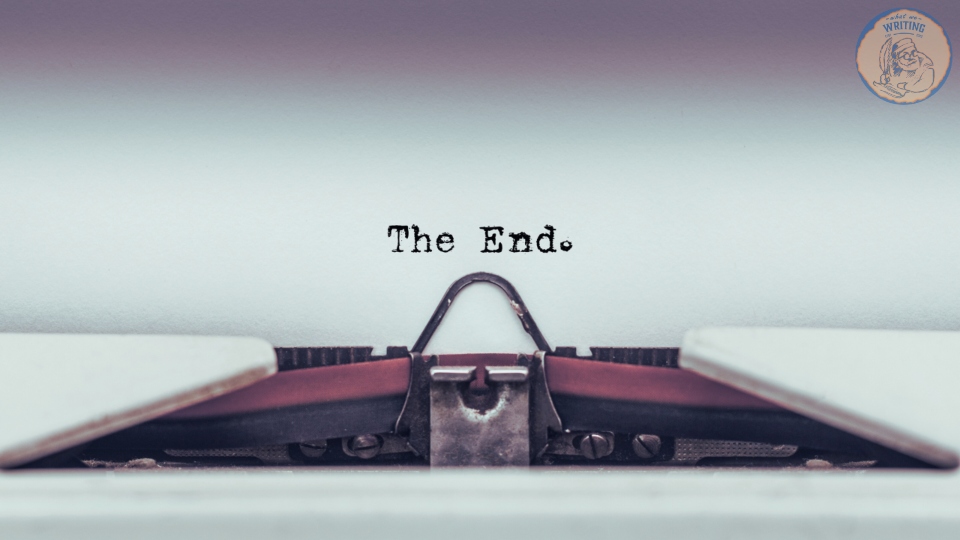
You started your story full of excitement. The first chapter wrote itself, setting the stage with compelling characters, exciting conflict, and endless possibilities. Even as the middle became challenging, you pushed through, gradually moulding your ideas into a full narrative. But now, the finish line is in sight, and everything has begun to slow. The ending feels elusive. Each possible conclusion feels either predictable, rushed, or somehow not the right fit.
If this sounds familiar, don’t worry, we’ve been there. Many authors discover that the final chapters are the trickiest part of the writing process. In fact, one of the most common challenges in fiction is understanding why writers struggle to write endings in the first place. After all, endings carry a distinct weight: they must resolve conflicts, complete character arcs, and deliver on the promises made throughout the story.
So, why do so many of us writers struggle to write endings? As we’ll show below, the answer stems from the pressures that only show up when a story is near its finale.
Why Endings Feel Harder Than Beginnings
When we writers begin a new story, we’re kicking off full of possibility. Every chapter opens new doors, introduces new ideas, and expands the world we’ve created. Beginnings are exciting because nothing has been decided yet. Our characters can find themselves anywhere, conflict can develop in a multitude of different directions, and the narrative is brimming with potential.
Endings work differently. Rather than creating opportunities, they eliminate them. We need to decide which plot threads to resolve, which relationships to prioritise, and what the final message of the story will leave. This is one of the biggest reasons why we find endings so hard to write. Each choice closes off different avenues, making the conclusion feel far more permanent than the opening chapters.
There’s also the worry over making the “wrong” choice. A writer may worry that readers will dislike someone’s fate, find the resolution predictable, or feel that certain questions weren’t given answers. After spending months – sometimes years – on a manuscript, the pressure to get the right ending can feel overwhelming.
At the same time, endings carry a distinct responsibility. Your audience will normally allow a slower chapter or a minor plot hole; however, a weak ending can totally upend how they viewed a whole story. Writers know this, which only increases the pressure to deliver a conclusion that feels earned, meaningful, and satisfying.
Each Ending Is a Commitment
Unlike the start of a story, an ending demands commitment. Writers need to make a definitive choice about their character arcs, thematic messages, and plot resolutions. They have to decide how their characters have changed, what the story ultimately means, and whether the central conflict has truly been resolved.
In a lot of ways, the ending is where a writer stops exploring possibilities and starts making promises fulfilled.

7 Reasons Writers Struggle To Write Endings
Identifying why writers struggle to write endings typically comes down to recognising that final chapters demand different skills compared to the rest of a story. Whilst beginnings are moulded around possibility and middles emphasise development, endings demand clarity, commitment, and resolution. Here are seven common reasons why many authors find themselves stuck when it comes to getting over the finish line.
1. They Don’t Know What the Story Is Really About
Many of us writers have no issue finding an interesting premise, a compelling character, or a vivid scene, but moulding that into a fully formed theme is another step entirely. As we draft, we gradually unearth what the story is really exploring beneath the surface.
The challenge here is that an ending should reflect the story’s deeper meaning. If the writer hasn’t identified the meaning yet, it can be tricky to know how the narrative should conclude. A story about revenge might ultimately become one about forgiveness. A story about survival may show itself to be about belonging in the long run. Until the central theme becomes apparent, the ending often feels frustratingly out of reach.
Check Out Our Guide On How To Develop A Theme
2. They Fear Disappointing Readers
Endings carry huge expectations. Readers invest time, emotion, and attention into each story, and they naturally expect a conclusion that rewards that investment.
If you’re like me, you’re constantly aware of this pressure. We compare our work to the best books, films, and other finales, wondering whether our own ending will stack up. We can become so consumed with creating the perfect conclusion that we wind up struggling to create any conclusion at all.
Perfectionism typically disguises itself as careful craftsmanship, but the truth is that it can keep us locked in an endless cycle of doubt. The fear of disappointing readers can become more paralysing than the challenge of writing the ending itself.
3. The Stakes Aren’t Clear Enough
Strong endings are built on strong conflicts. If those stakes have remained vague throughout the story, the resolution will typically feel equally uncertain.
Readers need to understand what can be gained, lost, achieved, or sacrificed. Without that clarity, the climax lacks momentum because the outcome doesn’t feel significant. Likewise, the writer may struggle to determine what the final confrontation should accomplish.
When writers come to the end of their stories and realise they don’t know exactly what’s at risk, the problem typically began far earlier in the manuscript. A weak ending is normally the result of unclear stakes rather than a flaw in the ending itself.
4. They Mistake Surprising for Satisfying
A lot of writers out there worry that readers will predict the ending. In response, they focus on crafting a shocking twist or unexpected revelation.
The issue here is that surprise and satisfaction aren’t the same thing.
An ending can be totally unexpected but also feel hollow because it ignores the story’s emotional foundations. On the flip side, some of the most memorable endings in fiction are predictable in broad terms, but deeply satisfying because they deliver on everything that has come before them.
As readers, we care less about being shocked than we do about feeling that the conclusion was earned. A twist should enhance the story’s meaning, not replace it.
5. The Character Arc Is Incomplete
Stories are ultimately about change. Readers may enjoy intricate plots and imaginative worlds, but what they connect with most strongly are the characters.
This means that an ending usually depends less on external events and more on internal transformation. The final battle, confrontation, or revelation only matters if it mirrors how the protagonist has grown.
Writers sometimes struggle because they know what happens in the plot, but not what happens within the character. If the protagonist’s emotional journey remains unfinished, the ending can feel incomplete, regardless of how nicely the external conflict has been tied up.
A satisfying conclusion typically answers one crucial question: who has this character become as a result of the story?
6. They Keep Revising the Middle
Another one I’m guilty of: some of us never make it to the ending because we keep returning to earlier chapters.
A new idea crops up, a subplot needs tweaking, or a character needs redeveloping. Each revision sends us back to the middle of the manuscript, delaying progress toward the conclusion.
Revision is a crucial part of writing, but excessive revision can become a form of avoidance. The middle of the story feels familiar and manageable, whereas the ending demands difficult choices and a sense of finality.
As a result, we can spend months polishing chapters that have already been written while making little progress on the chapters left unwritten.
7. They’re Burned Out
Writing a novel is a marathon, not a sprint. By the time writers approach the final chapters, they may have spent months or even years living with the same characters, problems, and scenes.
Creative energy naturally fluctuates over such a long project. What once felt exciting may now feel exhausting. Doubts become louder, motivation becomes tougher to maintain, and even simple choices can become overwhelming.
This mental fatigue usually shows up close to the finish line, creating the illusion that something is wrong with the story when the real issue is exhaustion.
In many instances, the writer doesn’t need a better ending – they need rest, perspective, and enough distance to see the story clearly again. Finishing a manuscript demands not just creative skill but also the endurance to carry an idea all the way through to its final destination.
Common Mistakes Writers Make When Ending A Story
Many common ending mistakes stem from the pressure writers feel to deliver a satisfying conclusion. After spending so much time building a story, it’s easy to stumble in the final chapters.
One of the biggest mistakes we’ve seen is rushing the ending. Writers keen to reach the finish line might resolve conflicts too quickly, leaving the audience feeling like a conclusion hasn’t been properly earned. Important emotional moments need room to breathe.
Another common problem is overexplaining. In an attempt to answer every question, writers can spell out themes, motivations, and meanings that readers have already understood. Trusting readers to make connections usually creates a stronger ending than explaining everything outright.
Some endings also ignore character growth. A dramatic climax may resolve the plot, but if the protagonist hasn’t changed in a meaningful way, the conclusion can feel emotionally hollow. Readers are interested in a character’s journey as much as they are in the event itself.
Writers can also undermine an ending by introducing new conflicts too late in the story. Major revelations or antagonists that show up in the final chapters usually feel disconnected from the narrative that came before.
Finally, there’s a temptation to tie up every loose end. We always need some kind of resolution, but leaving a few questions unanswered can make a story feel more authentic and memorable. Not every thread needs a neat bow to create a satisfying conclusion.
What Makes A Satisfying Ending?
If you’re wondering how to write a satisfying ending, the answer is surprisingly simple: readers want a conclusion that feels earned. Whilst every genre has different expectations, the most effective endings typically succeed in three key areas – emotional resolution, plot resolution, and thematic resolution.
Emotional Resolution
At their core, every story is about change. Readers invest in characters because they want to see how their experiences shape them. By the end of the story, the protagonist should have learned something, overcome a flaw, accepted a truth, or made a meaningful decision.
This doesn’t mean that every ending needs to be happy. Tragic endings can be just as fulfilling if they complete the character’s emotional journey. What matters is that the audience can see how the events of the story have transformed the people at their heart.
Plot Resolution
A satisfying ending should also address the story’s major conflicts. Your audience wants answers to questions the narrative has sunk hundreds of pages into asking. Will the hero succeed? Will the mystery be solved? Will the relationship rekindle?
Not all your subplots need definitive conclusions, but the central conflict should feel resolved. When major plot threads are abandoned or ignored, readers can leave feeling frustrated rather than fulfilled.
Check Out Our Guide On How To Write Subplots
Thematic Resolution
Beyond characters and plot lies the story’s deeper meaning. Every narrative explores ideas, whether intentionally or not. Themes such as love, justice, identity, sacrifice, or redemption lend a story purpose beyond its events.
A strong ending reinforces these themes through the decisions characters make and the consequences they face. Rather than stating a message directly, the conclusion demonstrates what the story ultimately believes about its central ideas.
When emotional, plot, and thematic resolution work in harmony, the result is an ending that feels both meaningful and memorable – one that lingers with readers long after they’ve turned the final page.
How To Write An Ending When You’re Stuck
Learning how to write an ending usually has less to do with inspiration and more to do with overcoming the mental obstacles that keep writers moving forward. When you’re stuck, it’s easy to assume the issue is your story. More often, the problem is uncertainty, perfectionism, or just good old-fashioned fatigue. These strategies can all be lifesavers for breaking through the roadblock and reaching a conclusion.
Write the Ending You Expect First
A lot of writers place enormous pressure on themselves to create a brilliant ending on the first attempt. This pressure can become paralysing.
Rather, write the most obvious ending you can think of. Don’t worry about whether it’s smart, original, or emotionally powerful. Simply get the story to the finish line. Once the ending exists on the page, you can analyse it, revise it, and improve it. A flawed ending can be fixed; a blank page cannot.
Ask What Your Characters Have Learned
When the plot feels complex, return to your protagonists.
Consider how your characters have changed since the start of the story. What belief have they challenged? What fear have they overcome? What truth have they accepted?
The answers here typically reveal the ending. Readers care deeply about transformation, and the final scenes should demonstrate how the characters’ journeys have changed their choices, actions, or perspectives.
Identify the Story’s Core Question
Every story asks a question, whether explicitly or implicitly.
Will the hero defeat the villain? Can a broken relationship be repaired? Is revenge worth the cost? Can someone ever truly change?
A strong ending answers the question the story has been exploring from the very get-go. If you’re not sure how to conclude your narrative, try identifying its central question and consider what answer feels the most honest and meaningful.
Write Several Possible Endings
We writers can get stuck because we assume there’s just one correct ending.
In reality, most stories have a huge number of different ending paths they could wind up going down. Try drafting two or three alternative endings. One may be more hopeful, another tragic, and another bittersweet. Exploring multiple possibilities allows you to compare their emotional impact and discover which version best serves the story.
Giving yourself options often removes the fear of making the wrong decision.
Finish Before You Perfect
In my humble opinion, this is the most important strategy: Finish before you perfect.
Many endings remain unwritten because writers keep looking for a flawless conclusion. But the perfect ending rarely appears through endless thinking. It stems from drafting, revising, and refining.
Your aim isn’t to write the finished version immediately. Your aim is to complete the story. Once you’ve reached the end, you’ll have the perspective needed to strengthen character arcs, sharpen themes, and improve the resolution. A completed ending, even an imperfect one, is infinitely more valuable than the perfect ending that only exists in your imagination.
Do Great Writers Struggle With Endings?
If writing an ending has gotten you down, you’re in good company. Even some of the best authors in the world have spoken openly about the challenges of bringing a story to a satisfying conclusion.
Stephen King, a staunch supporter of discovery writing, has become infamous for letting stories unfold naturally rather than following a rigid outline. While this approach can produce surprising and authentic narratives, it can also make endings more tricky to find because the destination isn’t always obvious from the off.
George R.R. Martin has also spoken about the complexities of managing large casts of characters, interconnected plots, and expansive fictional worlds. As stories grow in scope, finding a conclusion that feels satisfying to readers becomes increasingly challenging.
They’re far from alone. Many bestselling authors report that endings are among the toughest parts of the writing process. The reason is simple enough: endings carry the responsibility of fulfilling everything the story has promised. Struggling with them isn’t a sign of failure – it’s a sign that you’re tackling one of the toughest challenges in storytelling.
Wrap Up
Writing endings is tricky because conclusions carry the weight of everything that came before them. They need to resolve conflicts, complete character journeys, and leave readers with a lasting impression. However, a perfect ending rarely shows up immediately. The strongest conclusions are unearthed through drafting, revising, and understanding what your story is really trying to say.
If you’re struggling to finish your story, remember that uncertainty is part of the creative process. Keep writing, trust your characters, and focus on creating an ending that feels honest, meaningful, and earned.

James has been passionate about storytelling ever since he could hold a pen. Inspired by the epic fantasy and historical dramas he devoured in his youth, his work now centers on dark, psychological tales featuring intense, introspective characters and atmospheric, gothic undertones. In 2025, he founded What We Writing to share his creative journey and the lessons he’s learned along the way with fellow writers and passionate storytellers.

