
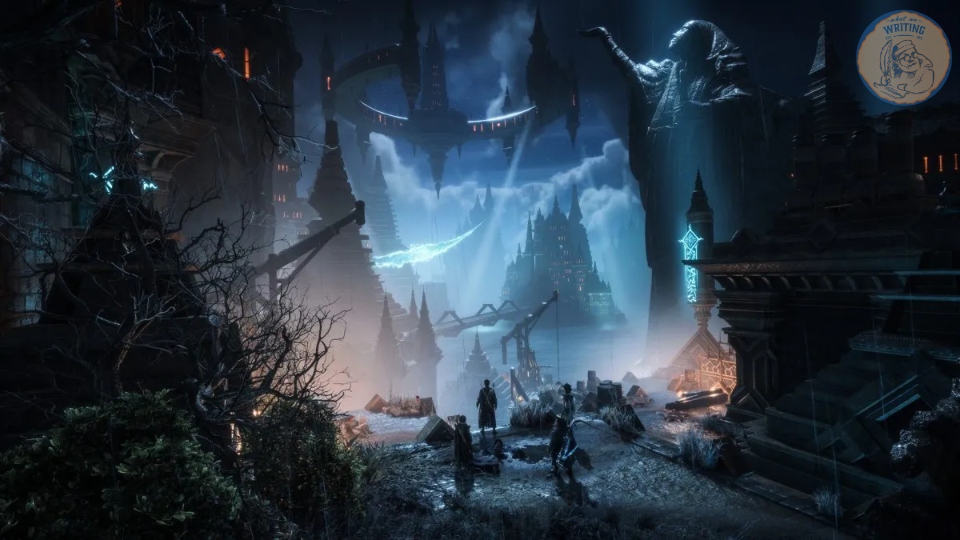
Have you ever been captivated by a story set in an entirely different world? One with its own rules, magic, and folktales? From sprawling kingdoms to ancient prophecies, high fantasy stories offer epic adventures that feel as real as our own history. But what is high fantasy exactly? And how does it compare to other types of fantasy tales? Today at What We Writing, we’re exploring what defines high fantasy, exploring popular examples of high fantasy books that shaped the genre, and sharing with you our best tips on how to write high fantasy yourself. Whether you’re a reader looking to understand the genre or a writer building your own epic world, this post will help you dive deeper into the heart of high fantasy!
What Is High Fantasy?
High fantasy (sometimes called epic fantasy) is a subgenre within fantasy in which the story takes place in a setting very unlike the real world, often dealing with high-stakes threats and forces. The story may feature fantastical creatures like centaurs, historic or unusual technologies, magical elements, and an abundance of the otherworldly.
High fantasies don’t need to feature Western fantasy tropes such as swords or dragons, though these are common characteristics of the subgenre.
The term ‘fantasy’ is best seen as a big umbrella term encompassing many specific subgenres, of which high fantasy is one. Some other famous types of fantasy include low fantasy, historical fantasy, wuxia, urban fantasy, sword and sorcery, and dark fantasy.

5 Key Elements Of High Fantasy
Every writer brings their own unique spin to high fantasy stories, but most contain some recognisable elements that help them all feel like part of the overall formula:
High Fantasy Worldbuilding
One of the most defining characteristics of high fantasy (and what separates it from low fantasy) is a setting completely unlike Earth. This “secondary world” likely features things that make it wildly different from the world we recognise, such as different fauna, animals, races and cultures, belief systems, and civilisational structures.
- Picture J.R.R. Tolkien’s Middle Earth or Brandon Sanderson’s Roshar, both feel like a living, breathing place.
- High fantasy worldbuilding often features detailed geography, unique magic systems, and deep cultural lore.
Epic Conflicts
Another key element that distinguishes high fantasy from other kinds of fantasy is high-stakes conflicts, one that usually throws the whole world into peril. High fantasy plots often lean on the traditional approach of good vs evil to help present the “goodies” from the “baddies.”
- The number of characters in high fantasies is often large, featuring heroes, villains, mentors, rulers, and commoners.
- Numerous plotlines can intertwine as events occur across the realm.
Heroes
Whilst it isn’t an absolute necessity for writing a good fantasy story, most high fantasy novels feature a main hero who must fight off the evil forces and save the world. In most instances, the hero begins their journey in a childlike state, growing as the narrative progresses to understand their role and confront the conflict. Alternatively, they may embark on an epic quest (known as a “hero’s journey”) to gain knowledge and the skills necessary to overcome their enemies.
- Protagonists often grapple with the concept of the “greater good” or their own inner darkness.
- Villains may have grand, perhaps justifiable, intentions, or a tragic past, adding emotional depth to the story.
Fantastical Creatures
Most high fantasy stories contain unearthly creatures. These species can include anything from dragons, unicorns, vampires, or other beasts from folklore or urban legends. From elves, sorcerers, to ancient relics, magic and mythical beings are key to the fantasy experience.
- The magical systems in high fantasy might be structured and rule-based (like in Brandon Sanderson’s books) or mysterious and ancient (like Tolkien’s).
- Mythical creatures play a big role in both the worldbuilding and plot.
Cultures and Histories
The best high fantasy worlds feel authentic because they have a sense of scale. Writers spend hours developing extensive backstories, timelines, and mythologies that give their worlds depth.
- Expect to find distinct cultures, belief systems, and languages.
- Ancient prophecies, old wars, and legendary lost civilisations often play an influential role in the narrative.
High Fantasy vs. Low Fantasy
There are a fair number of similarities between high fantasy and low fantasy. However, there is one crucial difference that helps them both shine as their own unique, distinctive subgenre: setting. High fantasy stories take place in a non-Earth or secondary world, whereas low fantasy books are set somewhere on Earth or in a primary world very similar to it.
An example of high fantasy is The Lord of the Rings, set in Middle Earth. An example of low fantasy would be Harry Potter, set in a fictional version of the UK.
5 Examples Of High Fantasy Books
A Song of Ice and Fire By George R.R. Martin
In A Game of Thrones and the subsequent books in the series, George R.R. Martin describes a fantasy world consisting of two continents, Westeros and Essos, both locked in political turmoil between warring families and kingdoms.
The Cosmere By Brandon Sanderson
Brandon Sanderson designed a universe called the Cosmere, and he sets many of his books and short stories within this interconnected universe. Some of the best books in the Cosmere include the Mistborn book series and The Stormlight Archive series.
The Earthsea Cycle By Ursula K. Le Guin
Consisting of six novels and nine short stories, The Earthsea Cycle follows characters in the fictional realm of Earthsea, a number of small islands jam-packed full of different cultures, magic, and beliefs.
The Name of the Wind By Patrick Rothfuss
The first entry in Rothfuss’ series, called The Kingkiller Chronicle, charts one man’s recounts of his epic life within a fictional world called Temerant.
The Discworld By Terry Pratchett
Starting with The Colour of Magic in 1983, the Discworld series comprises over forty works with various recurring characters and storylines, including a cowardly wizard named Rincewind, a community of witches, and a personified version of death itself.
How To Write High Fantasy
Looking to write your own sprawling fantasy saga? Writing high fantasy books can be both an exciting adventure and a daunting challenge. With so many moving machinations – worlds, histories, magic systems, and characters – it’s easy to feel overwhelmed. Thankfully, with a little planning, you can conjure up a tale that feels just as immersive as the classics.
Here are some of the best tips for writing high fantasy that will help you bring your worlds and characters to life.
1. Begin with Worldbuilding – But Let the Characters Drive Things
While detailed high fantasy worldbuilding is essential, your audience will stay engaged with your story because they care about the characters within it. Begin by imagining your world’s most distinctive characteristics, but ensure your main characters have their own goals, flaws, and arcs that drive the story.
Great worldbuilding is the stage. Your characters are the stars.
2. Craft a Clear Magic System
Magic is often one of the key pillars of high fantasy stories, so a great strategy is to decide early on how it works. Is your magic system hard (defined rules and limitations) or soft (mysterious, unexplained forces)? Consistency is key, whichever you choose.
- A clear system prevents plot holes and strengthens the stakes.
- Don’t overlook the cost of magic – what is the price of power?
3. Map Out Cultures, Politics and History
Constructing a world that feels genuinely lived-in means thinking beyond the landscapes. Take the time to design cultures, hierarchies, beliefs, and power dynamics. Invest in the history of the world, even if not all of it winds up on the page.
This foundation gives your setting depth, heightening a reader’s experience.
4. Avoid Info-Dumping
It’s tempting to explain your whole world upfront, but try to resist that urge. Instead, reveal your lore and world rules as you tell the story, through dialogue, character interactions, and small details.
- Allow your audience to put things together.
- Show, don’t tell, is particularly important when writing high fantasy books.
5. Balancing Emotion with Scale
As we mentioned above, high fantasies typically centre around world-threatening stakes – wars, dark lords, ancient prophecies – but never lose sight of personal stakes. Even in the most epic of tales, readers love connection and depth to their characters.
- Ask yourself: What does your protagonist stand to lose?
- Let individual journeys mirror the wider conflict.
Check Out These Great Fantasy Openings For Inspiration

James has been passionate about storytelling ever since he could hold a pen. Inspired by the epic fantasy and historical dramas he devoured in his youth, his work now centers on dark, psychological tales featuring intense, introspective characters and atmospheric, gothic undertones. In 2025, he founded What We Writing to share his creative journey and the lessons he’s learned along the way with fellow writers and passionate storytellers.

