
Sometimes, the most powerful stories aren’t sprawling novels or long-winded tales – they’re just a handful of words. Brevity has a way of sharpening emotion, forcing each word to carry weight. That’s the magic of the six word story. The most famous example is often attributed to Ernest Hemingway: “For sale: baby shoes, never worn.” In just six words, this story conveys loss, mystery, and heartbreak – an entire life conjured between the lines. A six word story is exactly what it sounds like: a whole story told in just six words. Despite its extreme brevity, it can capture character, conflict, and emotion in a way that lingers with the audience. Today at What We Writing, we’re exploring what makes a six word story so compelling. You’ll find examples across different genres, discover how to craft your own, and learn new ways to use them – whether as a writing exercise, a social media challenge, or simply a spark of inspiration.
What Is A Six Word Story?
A six word story is a form of flash fiction distilled to its absolute core: a complete narrative delivered in just six words. Unlike longer works, every single word needs to work double-duty – hinting at characters, suggesting conflict, and leaving space for the readers’ imagination to fill in the blanks.
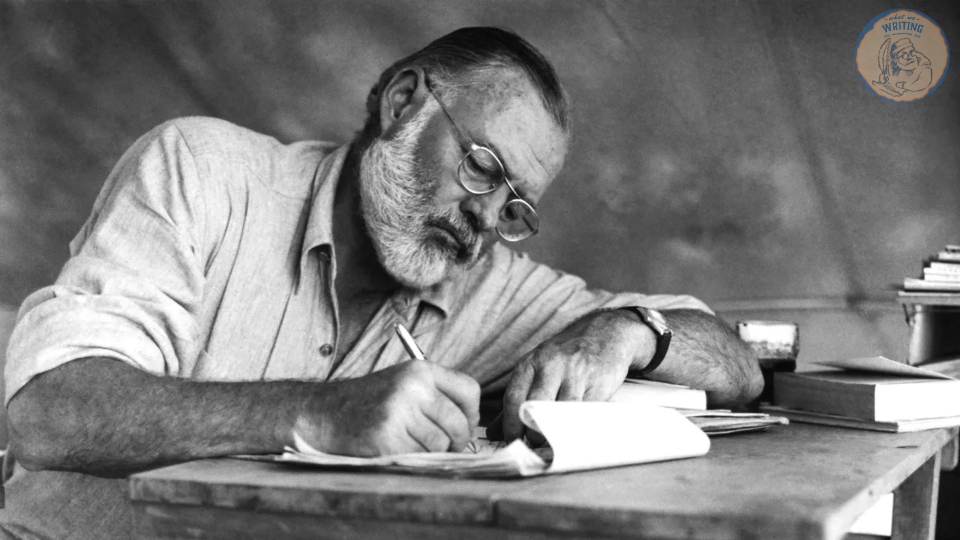
The form is most famously linked with Ernest Hemingway, who is usually credited with penning the haunting line: “For sale: baby shoes, never worn.” Whilst scholars continue to debate whether or not Hemingway actually wrote it, the story became a cultural touchstone and a perfect demonstration of how just six words can suggest a whole world of meaning.
Since then, the six word story has been embraced by writers, teachers, and online communities alike. Part of its appeal lies in its accessibility: anyone can try writing one, yet the best examples stay with readers long after they’ve been put down. They resonate because they capture something universal – love, loss, hope, humour – in a format that is both playful and profound.

Famous Examples Of Six Word Stories
The six word story form has produced some truly unforgettable lines. As we mentioned above, Hemingway remains the most famous.
What makes these six words so enduring is how their power lies in what isn’t said. The words themselves are simple, but the implication of grief and lost potential is what gives the story its punch. It lets the reader fill in the emotional blanks, which is where its impact stems from.
Some other well-loved examples that show the variety of tones this format can take include:
- “Brought roses home. Keys don’t fit.”
- “I came. I saw. I lost.”
- “Found true love. Married someone else.”
- “She believed. He left. I started.”
Each of these hints at a larger story: heartbreak, irony, or resilience. The brevity forces every word to matter, whilst the gaps invite the reader to imagine the rest. That interplay – between what’s written and what’s left unsaid – is precisely what makes six word stories so effective.
Check Out Our Guide To Situational Irony
How To Write A Six Word Story
- Step 1 – Begin with an emotion or them.
Pick the feeling you want to land (regret, wonder, fear, relief).
Example: Passport stamped. Gate closed. She stayed. - Step 2 – Find a single moment of conflict.
Zoom in on a hinge instant (decision, discovery, loss).
Example: First ultrasound; silence. Nursery already painted. - Step 3 – Lean on implication and subtext.
Use concrete details that hint at a larger story.
Example: Two toothbrushes remain. One suitcase missing. - Step 4 – Trim to the bone.
Swap weak fillers for loaded nouns/verbs. Cut articles if meaning survives.- Draft: She suddenly realised the ring was gone.
- Final: Ring vanished, tan line tells the truth.
Quick Templates (Fill in the Blanks)
- [Object] + [action]; [reversal]: Crib assembled; divorce papers on table.
- [Setting], [image]; [lonely action]: Empty stage, spotlight; understudy bows alone.
- [Desire]; [obstacle]; [choice]: Astronaut retired, earthbound, grows tomatoes now.
- [Before]; [after]: Wedding cancelled; honeymoon tickets still nonrefundable.
Editing Checklist for Maximum Impact
- Specific > vague: Choose ticket, ultrasound, tan line or thing, checkup, mark.
- Strong verbs: vanished, splintered, withstood, beat, was, had, did.
- Meaningful nouns: objects carry story weight (keys, suitcase, crib).
- Use punctuation as pacing: colons, dashes, and semicolons create turns.
- One turn: Aim for a shift or surprise (hope to loss, certainty to doubt).
- Read aloud: rhythm reveals extra words.
Common Pitfalls to Avoid
- A caption, not a story: mere description with no change.
- Cliches: swap out worn phrases for fresh specifics.
- Over-ambiguity: mystery is good; confusion isn’t.
- Forcing the twist: allow the implications to do the work.
How To Use Six Word Stories
The key trick behind tiny stories or six word stories is like any other effective story: having a strong beginning, middle, and end. Like any real story in the literary world, tiny stories possess all three, albeit just a micro version. As a result, you can wheel out a whole load of stories without the effort of writing a full-length novel and see how you like the arcs of each story. They’ll teach you how to feel out the crucial aspects of your story as well, and also help you understand if your own story is a story at all or just a statement because it’s missing a piece.
As for how you go about it, there isn’t a right or wrong way for how to use a six word story – just dive in and see how you get on! You can use it to hone in on your prose and make it more purposeful, or to look at the broad scope of storytelling without having to commit to a full project. Alternatively, you can just switch it up and discover a tiny story you love and write a lengthier version out of it for writing practice!
Furthermore, these types of short stories help younger storytellers find peace with the idea of giving their ideas away, something that not every writer is always 100% on board with. The reality with most tiny and six word stories is that the writers almost never receive credit for their work. But that’s okay, because, given how short the story is, it’s likely that whatever’s been said there has already been said before!
Creative Prompts For Six Word Stories
Sometimes, the easiest way to get going is with a theme. Below are a few categories, along with prompts and original six word stories to spark your creativity.
Love
Prompts: First dates, secret crushes, missed chances, lasting devotion.
- Locked eyes. Future unfolded in silence.
- Two mugs, one bed, forever mornings.
- He smiled. She stayed. Time didn’t.
Heartbreak
Prompts: Breakups, betrayal, loss, endings.
- Suitcase gone. His perfume lingers still.
- Wedding cancelled. Dress still in wardrobe.
- We promised forever. Forever left early.
Horror
Prompts: Strange noises, disappearances, dread, supernatural twists.
- Footsteps upstairs. I live alone.
- Coffin empty. Grave freshly filled.
- Mirror smiled. I didn’t smile back.
Comedy
Prompts: Awkward moments, irony, everyday mishaps.
- Burnt dinner. Ordered pizza. Five stars.
- Gym membership paid. Sofa still winning.
- Texted boss. Meant to text girlfriend.
Hope
Prompts: New beginnings, resilience, small wins.
- Sun rose. She rose with it.
- Lost job. Found passion. Finally free.
- Broken pieces, but stronger when joined.
Encourage yourself to pick a theme and try writing three different six word stories from it. You’ll be amazed at how much variety you can create even within the same emotional space.
Six Word Story Challenges & Communities
One of the best parts of writing six word stories is sharing them – and seeing how other writers can pack entirely different emotions into the same tiny form. Over the years, online communities have turned six word storytelling into a kind of literary game, sparking creativity across the world.
On social media, you’ll find writers sharing six word stories under hashtags like #SixWordStory on Twitter/X, Instagram, and TikTok. Reddit also hosts thriving groups such as r/sixwordstories, where people post new lines daily and vote on their favourites. Even writing platforms like Medium and Wattpad sometimes run six word challenges as quick prompts for authors.
Getting involved is easy:
- Join the conversation: Share your stories on social media with the hashtag #SixWordStory.
- Try themed challenges: Many communities post daily or weekly themes (love, fear, change, etc.) to write around.
- Engage with others: Comment on or remix other writers’ six word stories – it’s a great way to build connections.
- Start your own challenge: If you run a blog or book club, invite readers to write their own six word stories in the comments.
By participating, you’re not only practising brevity – you’re joining a global community of storytellers who know that sometimes six words are all you need.

James has been passionate about storytelling ever since he could hold a pen. Inspired by the epic fantasy and historical dramas he devoured in his youth, his work now centers on dark, psychological tales featuring intense, introspective characters and atmospheric, gothic undertones. In 2025, he founded What We Writing to share his creative journey and the lessons he’s learned along the way with fellow writers and passionate storytellers.

