
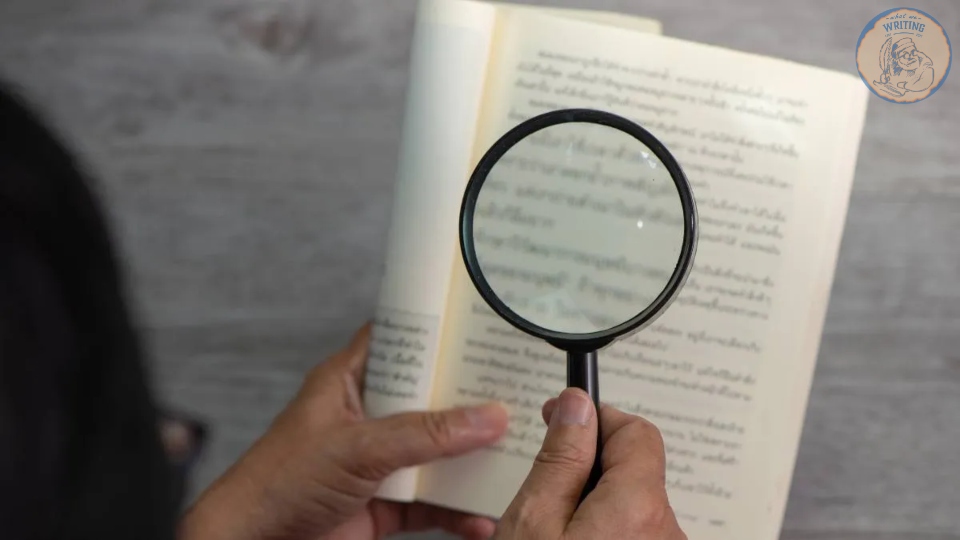
One of the biggest hurdles we face as mystery writers is managing the balance between planting clues and preserving the surprise. Readers love to feel clever, like they could have solved the puzzle if only they’d paid a bit more attention. If you give away too much too soon, your big twists are sure to fall flat. However, if your reveal feels completely unearned, it can come off as a cop-out. So, how do you go about keeping the audience guessing whilst still playing fair? Today at What We Writing we’re exploring how to plant clues in a mystery without spoiling the ending. From foreshadowing without spoilers to writing red herrings, we’ll cover the techniques to keep readers guessing until the final truth comes to light. Whether you’re just starting out or polishing your final draft, these tips guarantee to help you master the art of writing mystery plot twists that actually work.
What Makes A Good Clue In A Mystery Story?
A good clue in a mystery story is one that hides within plain sight. At first glance, it should appear as a minor, perhaps an offhand comment, a small background detail, or something easily dismissed. But later on, when the truth is revealed, that same clue needs to fall into place in a way that makes sense. The key is creating that satisfying “aha!” moment for the reader. The moment where everything makes sense.
When it comes to writing effective mystery clues, the key is subtlety. The best clues don’t scream for attention. Instead, they’re naturally woven into the story so readers encounter them without realising their significance, until it’s too late.
Here are some of the most common forms of effective clues:
- Physical evidence – a misplaced object, an unusual scent, or a strange injury.
- Offhand comments – a throwaway line that means more than it seems.
- Character behaviour – nervous twitches, lies, inconsistencies.
When used effectively, these elements help build breadcrumb trails that reward observant readers without spoiling the reveal.

How To Plant Clues Without Giving Away The Ending
Planting clues in a mystery book is all about balance. You want to leave a trail of breadcrumbs, but not a neon-lit path straight to the twist. Here are five key techniques to help you deliver satisfying surprises whilst keeping the audience on the edge of their seat:
1. Use the Rule of Three
A powerful technique in storytelling, the Rule of Three involves repeating an important detail or idea three times, each in a slightly different context. This repetition gently reinforces the clue in the reader’s subconscious without demanding too much attention.
For example, a character may mention a broken watch early on in the story. They may glance at it later on, and then finally reveal its hidden significance nearer the end. Each instance feels natural, but together, they build toward the payoff.
By applying the Rule of Three, you subtly emphasise the important details without overexplaining your reveal.
2. Distract with Red Herrings
Red herrings are false leads. Clues that appear to be important, but ultimately misdirect the reader. They’re a fundamental part of the mystery genre because they build tension and encourage speculation.
The key behind using red herrings in mystery writing is to make them believable. A good red herring should make perfect sense within the narrative and feel just as plausible as the actual solution. If it feels too far-fetched or deliberately misleading, readers will spot the trick and lose trust.
Plant red herrings with the same care you use for real clues; only reveal they’re false when it serves the plot.
Check Out Our Guide On How To Write A Red Herring
3. Embed Clues in Action or Dialogue
One of the best ways to hide clues in plain sight is to naturally embed them within scenes, rather than highlighting them with exposition. Let your characters live the clue, rather than explain it.
For example, instead of telling the audience that a door was unlocked, show a character slipping inside without any difficulty, and then move on. Or allow a suspect to casually mention a detail only the killer would know, buried within small talk.
Readers are more likely to overlook something that blends into the narrative flow until it is revealed with hindsight.
4. Use Foreshadowing, Not Foretelling
There’s a huge difference between foreshadowing and telegraphing. Foreshadowing layers subtle hints that something is coming. Telegraphing gives the game away too early.
When thinking about how to foreshadow in a mystery novel, aim for subtext and mood. A lingering glance, an unanswered question, or a symbolic object can all point to buried truths without having to explicitly reveal them.
Foreshadowing is a tool that builds suspense and prepares the audience for future twists, without revealing the surprise.
5. Give Readers a Sense of Control
One of the most satisfying aspects of reading a mystery is feeling like you could have solved it. Even if your readers don’t guess the ending, they’ll appreciate the clues that, in retrospect, make total sense.
Avoid twists that rely on information readers were never given, or that feel too sudden to be believable. Instead, make sure that when your twist does come to light, the audience is able to cast their minds back and say, “Ah! I see it now.”
Giving your audience a sense of control heightens their engagement and makes the payoff far more rewarding.
Common Mistakes When Planting Clues
No matter how many mystery novels you have under your belt, every writer is capable of falling into traps that weaken the impact of their twists. If your clues are too heavy-handed or too disconnected, the audience will either work things out too quickly or feel short-changed by the ending. Here are three of the most common pitfalls to steer clear of when planting clues, and how to fix them.
1. Overloading the First Chapters with Too Many Red Flags
It’s tempting to front-load your story with hints and suspicious behaviour. However, doing too much too soon can overwhelm readers and dilute the effectiveness of your key clues. Instead of building intrigue, it creates confusion and makes it harder for readers to invest in the characters or plot.
Tip: Pace your clues throughout the narrative. A gradual drip of information maintains tension and gives the story room to breathe.
2. Making the Twist Too Obvious
One of the most common mystery writing mistakes to avoid involves overemphasising a single clue, particularly if it connects directly to the twist. If you highlight a suspicious glove three times in the first half of the story, your readers might just suspect that it matters.
Tip: Use the Rule of Three with variation and blend your key clue amongst the other details. Allow it to be one breadcrumb among many.
3. Not Connecting the Clue to the Twist
A clue without a payoff is frustrating. However, a twist with zero setup feels like cheating. If readers can’t look back and see how the ending was built up, it won’t feel earned. The disconnect is one of the clearest signs that a twist hasn’t been properly supported.
If you’re wondering how to avoid giving away your plot twist, the answer lies in clarity, not secrecy. Readers don’t need to know what’s coming; they just need to feel that something is.
Tip: When revising, track every major twist to at least one earlier hint or clue. Ask yourself: Would the reader believe this development, even if they didn’t predict it?
Examples from Popular Mysteries
Sometimes, the best way to understand clue-planting is to see it in action. Below are a few standout examples of well-planted clues in mysteries, where the twist felt both surprising and totally earned, thanks to subtle, skilful storytelling.
Gone Girl by Gillian Flynn
Gillian Flynn deftly weaves together unreliable narration, timelines, and character psychology in Gone Girl. What makes the clues so effective here is how they’re nestled in emotional context; what a character decides not to say often matters more than what they do. Every reveal is built on small details you might have overlooked, but they were there the whole way through.
This is a brilliant example of how to foreshadow a twist without giving it away, as the clues are wrapped around misdirection and character tension.
Love Gone Girl? Check out the best books like Gone Girl on our sister site, What We Reading!
The Sixth Sense
Without wanting to give the actual twist away, The Sixth Sense is a textbook demonstration of how to hide clues in plain sight. Each key moment serves double duty, appearing ordinary at first, but gaining new meaning in hindsight. The movie doesn’t cheat; it simply invites you to view things from the wrong angle until the final reveal.
It is a perfect example of well-planted clues in mysteries that reveal rewatching (or rereading) once you know the truth.
The Girl with the Dragon Tattoo by Stieg Larsson
This contemporary mystery-thriller is jam-packed with information, some vital, some misleading. Larsson scatters pieces of the puzzle across interviews, old photographs, and memory fragments. What makes the end solution so satisfying is how these details all piece together in the final act, proving that nothing was random.
It’s an excellent case study in balancing red herrings with genuine clues, and in pacing the reveal so that the audience remains hooked without solving it all too quickly.
Each of these stories demonstrates how subtlety, structure, and emotional layering can make a mystery twist feel inevitable, in the best possible way.
Wrap Up
Planting clues in a mystery novel is a finely-tuned balancing act. Give too much away, and the twist loses its power. Hold too much back, and the audience feels cheated. The secret lies in layering your clues with care, using foreshadowing, red herrings, and subtle detail placement to guide readers without spoiling the surprise.
When done well, your clues won’t just lead to a great twist, they’ll ensure your whole story is more immersive, re-readable, and rewarding. Whether you’re writing your first mystery book or refining your final act, keeping this balance in mind will help you craft a narrative that readers are unlikely to forget.
Now it’s your turn: What’s your favourite mystery twist of all time? Which clue-planting technique do you always fall back on when writing? Let us know in the comments!
Check Out Our Guide On How To Write A Gripping Mystery

James has been passionate about storytelling ever since he could hold a pen. Inspired by the epic fantasy and historical dramas he devoured in his youth, his work now centers on dark, psychological tales featuring intense, introspective characters and atmospheric, gothic undertones. In 2025, he founded What We Writing to share his creative journey and the lessons he’s learned along the way with fellow writers and passionate storytellers.

