
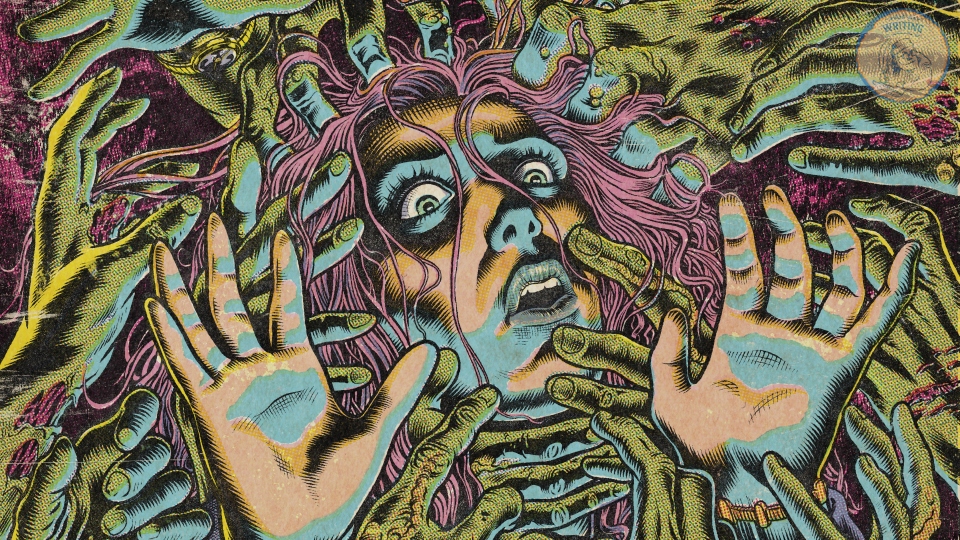
Horror short stories are distinctively effective because they deliver fear in its purest form. Unlike longer horror novels, short fiction has little space for distractions, letting us writers conjure tension, dread, and unease from the get-go. A single disturbing idea, unsettling setting, or bizarre character can stick in your readers’ minds long after the story ends.
Some of the most memorable writers get how effective horror leans more on atmosphere and suspense than graphic scenes. In a shorter format, each and every detail matters, and even the smallest moments have the potential to become deeply unsettling.
Today at What We Writing, we’re exploring how to write horror short stories that hook audiences quickly, build suspense effectively, create a frightening atmosphere, and deliver endings that leave a serious imprint.
What Makes A Horror Short Story Effective?
The best horror short stories are built around emotion. Fear, dread, suspense, and unease are all what keep us turning the pages, even when we might want to look away. Whilst some horror focuses on physical dangers and graphic imagery, the majority of the most successful stories lean on emotional horror instead. Feelings such as paranoia, grief, guilt, isolation, or helplessness can often create a deeper sense of fear than just violence on its own.
Atmosphere also plays a huge role in successful horror fiction. An unsettling setting, eerie silences, or subtle feelings that things are just “wrong” can be much more frightening than constant jump scares or shock moments.
Horror readers want tension to build gradually, allowing their imagination to join the dots. Oftentimes, it’s what remains unseen that becomes the scariest part of the story.
Horror short stories also work differently from horror novels. Because the format is snappier, the pacing needs to move much faster. There is typically a smaller cast of characters, fewer locations, and one central terrifying idea fuelling the narrative.
Rather than multiple subplots or long explanations, effective horror short stories stay tightly focused on creating a single emotional impact.
Perhaps most importantly of all, horror short stories need a memorable ending. Whether the conclusion is shocking, ambiguous, or deeply unsettling, the final moments are usually what we readers remember the most.

Check Out The Best Horror Books That Build Gradually On Our Sister Site, What We Reading
Choose The Type Of Horror You Want To Write
One of the first steps in learning how to write short horror stories is choosing which type of horror you want to explore. Different horror subgenres create fear in different ways, and understanding them can help mould your atmosphere, characters, and plot more effectively.
Psychological Horror
Psychological horror is all about emphasising the mind rather than any physical threats. Fear often comes from paranoia, obsession, guilt, trauma, or madness, leaving readers unsure of what is real.
Internal conflict is central to this type of horror story, making the protagonist’s fragile emotional state just as frightening as any external threat. Stories involving unreliable narrators, disturbing memories, or growing paranoia are common within this space.
Supernatural Horror
Supernatural horror deals with forces beyond our normal understanding, including ghosts, demons, curses, haunted places, and unexplained phenomena. The bulk of the scares here comes from mystery and uncertainty.
Rather than revealing everything immediately, effective supernatural horror gradually builds tension around the unknown, allowing our imaginations to fill in the gaps.
Body Horror
Body horror explores fear through physical transformation, disease, mutation, or loss of bodily control. This genre usually creates discomfort because it tackles a universal: the human body itself. Even subtle physical changes can feel disturbing when described with the right level of detail and unease.
Check Out These Horror Writing Prompts Inspired By Childhood Fears
Survival Horror
Survival horror is all about danger and vulnerability. Characters might be isolated, pursued by monsters, trapped during disasters, or forced into extreme scenarios where survival becomes their sole goal.
These stories all thrive on tension, urgency, and helplessness, making readers constantly fear what’s coming next.
Cosmic Horror
Cosmic horror focuses on humanity’s insignificance in the face of incomprehensible forces. Instead of relying on traditional monsters, this genre generates fear through the unknowable. Characters often discover truths about existence that leave them powerless, overwhelmed, or driven to madness.
Check Out Our Guide To Writing Cosmic Horror
Folk Horror
Folk horror blends horror with rural environments, isolated communities, rituals, and ancient traditions. The fear usually comes from hidden beliefs, strange customs, or the feeling that something old and dangerous still lurks beneath the surface of ordinary life.
Atmosphere again plays a huge role in folk horror, with nature and isolation often becoming threatening in their own right.
Check Out Our Guide On How To Write Folk Horror
Start With A Strong Horror Premise
Every effective horror short story starts out with a strong central idea. Because short fiction has limited space, your premise needs to create tension immediately and remain focused throughout the story. The best horror concepts are usually built around a single fear or unsettling question that instantly grabs your attention.
A useful place to begin is by asking yourself: “What really scares me?” Personal fears usually lead to more believable and emotionally effective horror. Fear of being watched, losing memories, being trapped, or not being believed can all become powerful frameworks for a story.
Even the most mundane fears can feel terrifying when placed in the right scenario.
Many horror writers also develop concepts using “what if?” questions. These questions create immediate intrigue while opening the door to suspense and mystery. For example, “What if your reflection began moving on its own?” or “What if a town refused to allow visitors in, or out?” Both of these concepts instantly raise questions and create unease before things have even started getting spooky.
When writing short horror stories, simplicity is usually more effective than complexity. Rather than trying to include multiple monsters, twists, or subplots, focus on developing one terrifying concept as strongly as possible. A crowded narrative will weaken your tension and leave important ideas underdeveloped.
Short horror works best when each and every scene, detail, and moment supplements the same central fear.
By beginning with a focused premise, you lend your story a stronger emotional core and make it easier to generate suspense from start to finish.
Create An Unsettling Atmosphere
Atmosphere is one of the most important components to horror fiction. Long before anything frightening actually occurs, readers should already feel uneasy. A strong atmosphere creates tension, builds anticipation, and makes even ordinary moments feel threatening.
Settings play a huge role in this. Empty houses, dense forests, abandoned hospitals, isolated small towns, and confined spaces all naturally create vulnerability and discomfort. Horror settings are at their best when they make characters feel hemmed in, exposed, or disconnected from safety. Even familiar locations can become frightening when described in the right way.
Sensory details are also essential for building dread. Strange sounds in another room, flickering lights, damp air, unpleasant smells, or unnatural silence can all make readers feel unsettled without explicitly explaining why. Texture and lighting can also influence mood, making environments feel cold, claustrophobic, decayed, or unfamiliar.
One of the most effective horror techniques is making ordinary things feel wrong. A quiet neighbourhood, a childhood bedroom, or a friendly face can soon become disturbing through subtle changes and distorted normality.
When familiar places suddenly feel unsafe, readers experience the same confusion and fear as the characters, making the horror far more immersive.
Write Characters Readers Care About
Strong horror thrives on emotional investment. Readers are far more affected by frightening situations when they care about the characters living through them. One of the easiest ways to make a protagonist feel believable is by giving them a vulnerability. Grief, isolation, guilt, or anxiety are all perfect ways of moulding how a character responds to horror, whilst also making their emotional journey that much more compelling.
In horror short stories, smaller character casts are typically more effective. Fewer characters allow your audience to focus more deeply on the protagonist(s), while increasing their feelings of isolation and tension. A crowded cast usually just distracts from the central fear and reduces the emotional impact of key moments.
It’s also important to allow characters to make realistic mistakes. Fear causes people to panic, hesitate, deny danger, or make poor decisions. Perfect horror protagonists usually feel unrealistic and difficult to connect with. Human flaws and emotional reactions make the story feel far more believable – and often make the horror even more painful to witness.
Master Pacing And Suspense
Pacing is undoubtedly one of your most important skills in writing horror. Even the most frightening concept in the world will lose its ‘oomph’ if the story takes too long to get moving or reveals too much too soon. Effective horror stories keep the audience hooked from the get-go, whilst gradually increasing tension until it all becomes unbearable.
Because short fiction has limited space, it’s typically best to begin close to the horror. This doesn’t necessarily mean opening with a demon exorcism or some other shocking event, but readers should quickly sense that something is wrong.
Avoid too much lengthy backstory, world-building, or character introductions that delay your central conflict. Rather, use the opening pages to establish intrigue and hook the reader immediately.
As the story unfolds, the threat should escalate steadily. Horror is usually at its best when it moves through stages of suspicion, unease, and finally terror. A character may notice something strange, then begin to suspect a larger danger, before eventually confronting the horrifying reality. Each scene needs to increase tension or raise the stakes in some way.
Unanswered questions are another brilliant way of building suspense. Why is the neighbour acting weird? Who is leaving the message on your protagonists’ phones? What really happened in the abandoned camp all those years ago? Strategic ambiguity encourages readers to keep on turning the page in search of answers.
However, revealing everything too quickly can weaken that sense of mystery that drives horror forward.
Finally, learn when to withhold information. A lot of us writers make the mistake of fully explaining the monsters, supernatural entities or mysteries. The reality is that the unknown is usually far more frightening.
Allowing readers to conjure parts of the threat themselves can elicit stronger emotional responses than any detailed explanation. In horror, less is often more, and the things left unseen or unexplained can become the most terrifying element of all.
Check Out Our Guide To Writing Slow Burn Horror
Show Horror Instead Of Explaining It
One of the most handy horror writing techniques is showing fear rather than explaining it. While it can be tempting to reveal precisely how a monster works or provide ample detail on how something spooky works, too much explanation often reduces fear. Mystery is a powerful tool in horror because the unknown allows readers’ imaginations to fill in the gaps.
Rather than outlining every detail, use suggestion and implication to create unease. A strange noise coming from behind a locked door, a fleeting figure glimpsed at the end of a hallway, or a series of unexplained events can be far more frightening than a total reveal.
Small clues encourage readers to picture what might be happening, which usually creates greater tension than just showing the threat directly.
Missing information can also make a scene far more unsettling. Characters might not fully understand what they are facing, and readers do not always need all the answers either. By withholding certain details, you create uncertainty and keep the suspense fuelled throughout the narrative.
Trust your readers’ imaginations. What one person imagines lurking in the darkness might be far more terrifying to them than anything described on the page.
In horror, fear can come just as much from what is left unseen as what is shown.
How To Write Truly Scary Scenes
Writing a scary scene is about far more than delivering a sudden shock. While jump scares can create a brief reaction, lasting fear comes from anticipation. Readers need time to sense that something is wrong before the horror arrives. By building tension gradually, you create suspense that keeps readers hooked and makes the eventual scare far more effective.
One of the best ways of creating anticipation is to focus on what might happen rather than what is happening. A character hearing footsteps in their home or noticing a door slowly opening on its own is far more terrifying than an immediate confrontation. The longer readers are forced to wait and wonder, the more tension builds.
Contrast is another powerful tool in horror writing. Fear usually becomes stronger when it interrupts moments of normality. A peaceful family dinner, a quiet walk home, or the safety of a familiar bedroom can quickly become unsettling when something feels out of place. Turning safe spaces into dangerous ones creates a feeling of vulnerability because readers no longer know where they can find security.
A lot of the best horror scenes also tap into universal fears. Darkness, isolation, death, loss of identity, and loss of control resonate because they reflect anxieties that most of us can understand. While monsters and supernatural threats may vary from story to story, these deeper fears often provide the emotional groundwork that makes horror feel real.
Ultimately, the scariest scenes blend anticipation, contrast, and emotional fear. By focusing on tension before terror and tethering your horror to universal human anxieties, you can create moments that linger with readers long after they finish the story.
Craft A Memorable Horror Ending
A strong ending can take a half-decent horror story into something truly memorable. Because horror short stories are often read in a single sitting, the final moments tend to stick in readers’ minds long after they’ve finished. Whether your ending is shocking, tragic, or ambiguous, it needs to feel like a natural conclusion to the fear you’ve been establishing throughout the tale.
Twist endings are a popular go-to in horror, but they work best when they feel earned. A surprising revelation can totally flip how readers view the story, but twists that exist solely for shock value usually just feel forced. The most effective twists are supported by subtle clues that seem obvious in hindsight but remain difficult to predict during a first read-through.
Bleak endings are another staple of horror. In these stories, the protagonist fails, the monster survives, or the horror ultimately wins. Whilst not every story needs a pessimistic conclusion, bleak endings can be especially effective because they deny readers the comfort of a happy conclusion. The feeling that danger still exists can make things feel more unsettling.
Ambiguous endings leave some questions unanswered. Rather than explaining everything, they allow the audience to interpret events for themselves. Was the threat real? Did the protagonist escape? Is the horror truly over? This uncertainty can keep readers thinking about the story long after it ends.
Another effective approach is the final image ending. Rather than leaning on a major twist or explanation, the story concludes with one disturbing image or realisation. A figure standing in a doorway, a phone ringing with no one on the other end, or a reflection behaving strangely can all create a powerful final impression.
Whatever ending you land on, aim to leave readers with a lasting emotional reaction. The best endings in horror don’t just wrap up the story – they ensure the fear follows readers beyond the final page.
Check Out Our Guide On How To Write A Story Resolution
Common Mistakes To Avoid When Writing Short Horror Stories
Even veteran horror novelists can fall into common horror-writing traps. One of the biggest mistakes we see is relying too much on gore. Whilst graphic scenes are effective in some stories, blood and violence alone don’t always create lasting fear. Readers are typically more disturbed by suspense, atmosphere, and psychological tension than by explicit descriptions.
Another common mistake is explaining too much. Horror thrives on mystery, and over-explaining monsters, supernatural events, or strange occurrences can reduce their impact. Leaving some questions unanswered usually makes a story more unsettling.
Writers should also be careful with cliché characters. The sceptic who ignores obvious danger, the helpless victim, and the one-dimensional villain can all make a story feel samey. Rather, focus on creating believable characters with their own distinct traits, flaws, and fears.
Weak endings can also undermine an otherwise effective story. If the conclusion feels rushed, confusing, or lacks emotional impact, readers might forget the story quickly. Horror endings should leave a lasting imprint, whether through shock, dread, or ambiguity.
Finally, avoid copying popular horror trends without adding your own spin. Drawing inspiration from successful stories is grand, but the most memorable horror often comes from exploring familiar fears in fresh and unexpected ways.
Wrap Up
Learning how to write horror short stories is ultimately about understanding fear and using it effectively. Whether you’re exploring psychological horror, supernatural threats, body horror, or something else entirely, the most memorable stories focus on atmosphere, suspense, and emotional impact, rather than shock value alone.
Start with a solid central fear, keep your premise focused, and build tension gradually. Create characters readers care about, use setting to establish unease, and trust your audience’s imagination to bridge the gaps. Most importantly, remember that horror short stories are at their best when each scene contributes to a single unsettling effect.
Like any writing skill, horror improves with practice. Experiment with different subgenres, study successful horror authors, and don’t be afraid to test unusual ideas. The more you write, the better you’ll become at creating stories that stick in your readers’ minds.
Now that you know how to write horror short stories, it’s time to embrace your darkest ideas and get writing!

James has been passionate about storytelling ever since he could hold a pen. Inspired by the epic fantasy and historical dramas he devoured in his youth, his work now centers on dark, psychological tales featuring intense, introspective characters and atmospheric, gothic undertones. In 2025, he founded What We Writing to share his creative journey and the lessons he’s learned along the way with fellow writers and passionate storytellers.

