
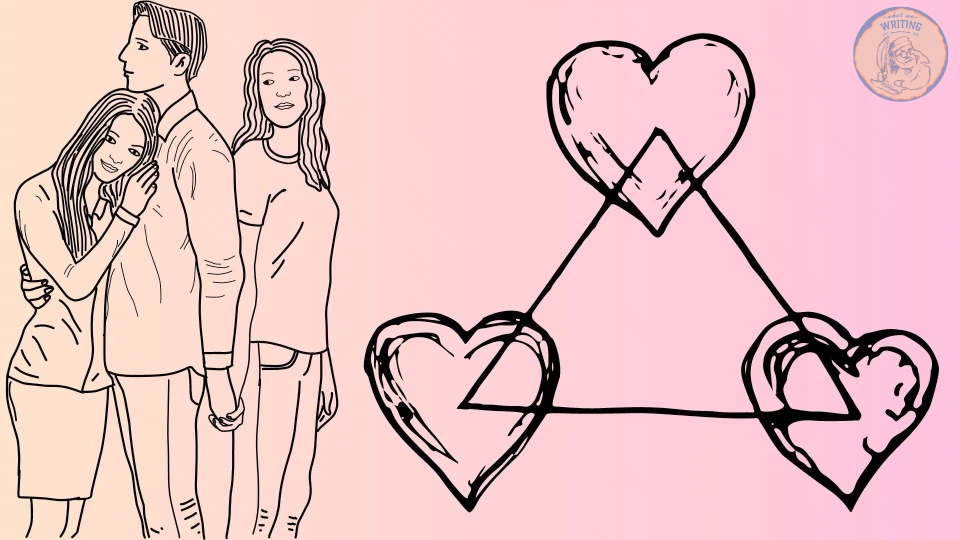
Love triangles are one of the most enduring tropes in storytelling – and one of the easiest to get wrong. When they’re done well, a love triangle is perfect for generating palpable romantic tension, deepening character development, and driving them toward impossible decisions. When they’re done badly, it can feel predictable, overused, or simply drama for the sake of drama. That’s why learning how to write a love triangle properly matters.
At its heart, writing a love triangle isn’t just about putting three characters in competition with one another. It’s about the desire, identity, and stakes in play. Every relationship needs to unveil something different about who your MC is – and who they stand to become. If one option is obviously superior to the other, or if the conflict depends on jealousy, your audience is guaranteed to see right through it.
Today at What We Writing, we’re breaking down precisely how to write a love triangle that feels authentic and emotionally charged. You’ll find practical steps, common mistakes to avoid, and examples of love triangles in fiction that truly work – so you can create tension that keeps readers turning the page.
What Is A Love Triangle In Fiction?
At its simplest, a love triangle definition is this: three characters tangled together by romantic desire, where at least one person must decide between two potential partners. However, in practice, the love triangle trope is much more layered than that. It isn’t just about who ends up with whom in the end – it’s about jostling values, identities, and potential futures.
In the majority of love triangles you’ll find in fiction, two rivals compete for one person’s heart. This is the classic structure we all recognise: one protagonist torn between two distinct love interests. However, there are other variations. Sometimes, there’s a mutual tension between all three characters, leading to messy dynamics and blurred loyalties.
In other love triangle stories, alliances change over time – today’s rivals could become tomorrow’s confidants. The emotional geometry here can evolve, which is often what keeps us readers hooked.
Boiled down, love triangles are so good because they intensify romantic conflict in stories. They raise the stakes of every single interaction. A glance, a secret, or a betrayal carries more weight when someone else stands to lose it all.
As readers, we love that emotional tension – that push and pull between desire and consequence – because it matches the uncertainties of real life.
The best love triangles not only ask “Who are they going to choose?” They ask, “Who will they become because of that choice?”

Why Love Triangles Work (When Done Well)
If you’ve ever found yourself wondering why readers love triangles, the answer isn’t just drama – it’s depth. A strong love triangle intensifies romantic tension in novels by forcing characters into impossible positions. Each interaction carries risk. Every decision has consequences. That constant pressure naturally raises the stakes.
First, there are emotional stakes. Someone is going to be hurt. A friendship might fracture. A future might close off forever. But beyond that, a well-written triangle typically involves moral, social, or even external stakes – family expectations, political alliances, or personal safety. The romance becomes intertwined with bigger conflicts, which makes it feel meaningful rather than melodramatic.
Love triangles also drive deep emotional investment. Readers aren’t just rooting for a couple – they analyse, debate, and project. They imagine which version of the MC’s life feels most authentic. That’s because the real tension isn’t just between two love interests. It’s internal. It’s about identity and choice.
When they’re at their best, a love triangle becomes powerful character conflict in romance. The main character’s choice showcases who they are, what they value, and how much they’re prepared to sacrifice. When done well, the outcome feels like growth – not just a romantic resolution, but a transformation.
Step-By-Step: How To Write A Love Triangle
If you’re looking to master the art of writing a love triangle, you need more than drama and longing glances. The strongest love triangles are built deliberately, with character stakes and a theme working together. Here’s how to construct one that feels compelling, rather than contrived.
1. Make All Three Characters Fully Developed
The quickest way to ruin a love triangle is the “obvious choice” problem. If one love interest is so obviously kinder, more attractive, and more compatible, your audience won’t feel any tension; they’ll just feel impatient.
Strong love triangle characters are fully realised individuals, not romantic placeholders. Every person in the triangle needs to have:
- Clear goals that exist outside the romance
- Emotional wounds that mould how they love
- A distinct worldview that clashes or aligns differently with the protagonist
When all three characters want something meaningful – and those desires conflict – the triangle gains weight. Readers should genuinely understand why each pairing makes sense, even if they personally prefer one outcome.
2. Give Each Relationship Real Chemistry
To truly create romantic tension, every relationship must feel believable and emotionally charged. If one connection feels flat, the triangle collapses.
Show why each pairing works. Perhaps one relationship presents safety, shared history, and understanding. The other might offer passion, unpredictability, or the promise of reinvention. Contrast is key. Think in terms of dynamics: comfort vs excitement, loyalty vs freedom, past vs future.
Be careful to not make relationships purely physical and the other purely emotional unless that imbalance is intentional and thematically relevant. Audiences need to feel that both options offer something extremely valuable. The tension comes from knowing that choosing one means losing the other.
3. Raise the Stakes Beyond Romance
Romantic indecision is enough on its own. The best triangles build conflict in a love triangle that goes beyond feelings. Consider:
- Social consequences (family expectations, reputational damage, political alliances)
- Moral dilemmas (betrayal, loyalty, promises already made)
- Friendship fallout (particularly if the rivals know one another)
- Power imbalances that complicate consent or fairness
When the decision affects more than just the MC’s love life, the tension heightens. Now the decision risks community, identity, or safety – not just the heartbreak.
4. Make the Choice Matter
The ending of a love triangle should never feel arbitrary. The final decision must reflect your story’s wider theme.
Ask yourself: What is this story truly about? Security vs self-discovery? Duty or desire? Healing vs self-sabotage? The protagonist’s decisions should embody the central conflict.
It also needs to cost something. If no one is hurt and nothing is lost, the emotional journey feels empty. The ending of a love triangle is at its best when the MC comes away from things changed – clearer about who they are, what they value, and what they’re prepared to give up.
5. Avoid Common Love Triangle Mistakes
Even strong premises can fall into familiar traps. Watch out for some of these common love triangle cliches:
- Making one option clearly better, removing any real suspense
- Dragging the triangle out long after the emotional peak
- Using jealousy as the only source of tension
- Forgetting the protagonist’s agency and allowing events to choose for them
A love triangle needs to feel like a crucible for a character, not a device to stall the plot. If each character has depth, each relationship has chemistry, and the final decision carries genuine weight, your triangle won’t just create drama – it will drive transformation.
Different Types Of Love Triangles To Write
There’s more than one way to structure a love triangle. Exploring different types of love triangles in books can help you avoid cliches and find a version that best suits your genre, themes, and characters.
Friends-to-lovers vs new flame is one of the most popular variations. Here, the protagonist is torn between a long-standing connection and an exciting new possibility. The tension here stems from comfort versus risk – choosing history and safety, or passion and change.
In fantasy stories or high-stakes situations, you might opt for a rival in a fantasy world. These triangles usually carry political or magical consequences. Choosing one person could mean choosing a kingdom, a cause, or a destiny. The romance becomes entangled with power and survival, raising the stakes far beyond personal feelings.
A forbidden love triangle adds external pressure. Perhaps one relationship breaks social conventions, family expectations, or moral codes. The tension arises not only from desire but from the consequences of acting on it.
You could also potentially explore a dark or morally complex triangle, where none of the options is totally safe or healthy. Competing loyalties, manipulation, or blurred ethics can create a psychologically intense dynamic.
Finally, consider a reverse triangle – where the protagonist doesn’t simply decide between two people, but between two worlds, identities, or futures embodied by those relationships. This approach deepens the thematic resonance and ensures the choice reflects more than just romance.
Examples Of Love Triangles In Popular Fiction
Looking at some of the most iconic love triangles in books can showcase why some stories spark endless debate while others fall flat.
In Suzanne Collins’ The Hunger Games, the triangle between Katniss, Peeta, and Gale works because each boy represents a different worldview. Peeta embodies empathy and honour; Gale represents anger and rebellion. Katniss’ eventual decision isn’t just romantic – it mirrors who she’s looking to become after trauma. The emotional mechanics are tethered directly to the theme.
Similarly, Twilight by Stephenie Meyer builds tension by contrasting safety and danger. Edward and Jacob offer Bella distinctly different futures. Readers invested not just in chemistry, but in identity – which life fits her best?
In Cassandra Clare’s The Infernal Devices, the triangle works because both love interests are extremely sympathetic and genuinely vulnerable. The conflict here never feels totally shallow; it grows from loyalty, illness, sacrifice, and genuine affection.
The lesson for us writers? The strongest love triangles are constructed on theme and character contrasts. When each relationship represents a meaningful path forward, readers won’t just pick sides – they’ll feel the gravity of their decision.
Check Out The Best Love Triangles In Books On Our Sister Site, What We Reading
How To Make Your Love Triangle Feel Fresh
If you’re worried your story feels predictable, the solution isn’t about abandoning the trope – it’s finding unique love triangle ideas that shift the emotional pattern.
Begin by subverting expectations. If readers assume the brooding outsider is going to win, allow the steady best friend to surprise them. If one love interest appears perfect on paper, reveal the subtle incompatibilities that matter most. Small reversals can totally upend the emotional trajectory.
You might also want to shift POV. Showing scenes from the rivals’ perspectives provides depth and stops either from feeling like a narrative obstacle. When your readers understand what each character stands to lose, the tension becomes layered rather than one-sided.
Fancy another bold play? Let the “wrong” choice win – at least on the surface. Maybe the protagonist chooses passion over stability, or duty over desire. As long as the choice aligns with the theme and character growth, it will feel earned.
Or, remove the traditional winner entirely. The protagonist could walk away from both options, choosing independence, healing, or self-discovery instead. Sometimes, the freshest love triangle isn’t about who they fall for – it’s about choosing themselves.
Wrap Up
Writing a convincing love triangle isn’t just about prolonged indecision or manufacturing jealousy. It’s about building layered characters, meaningful stakes, and a decision that reveals something profound about your protagonist.
When you understand how to write a love triangle with emotional depth, every relationship becomes more than a romantic option – it becomes a reflection of identity, values, and growth. Focus on contrast, consequence, and character transformation, and your story won’t just spark debate. It will linger. Because the best love triangles don’t just ask who wins – they ask who the protagonist becomes because of the journey.
Check Out Our Guide To The Rule Of Three In Creative Writing

James has been passionate about storytelling ever since he could hold a pen. Inspired by the epic fantasy and historical dramas he devoured in his youth, his work now centers on dark, psychological tales featuring intense, introspective characters and atmospheric, gothic undertones. In 2025, he founded What We Writing to share his creative journey and the lessons he’s learned along the way with fellow writers and passionate storytellers.

