
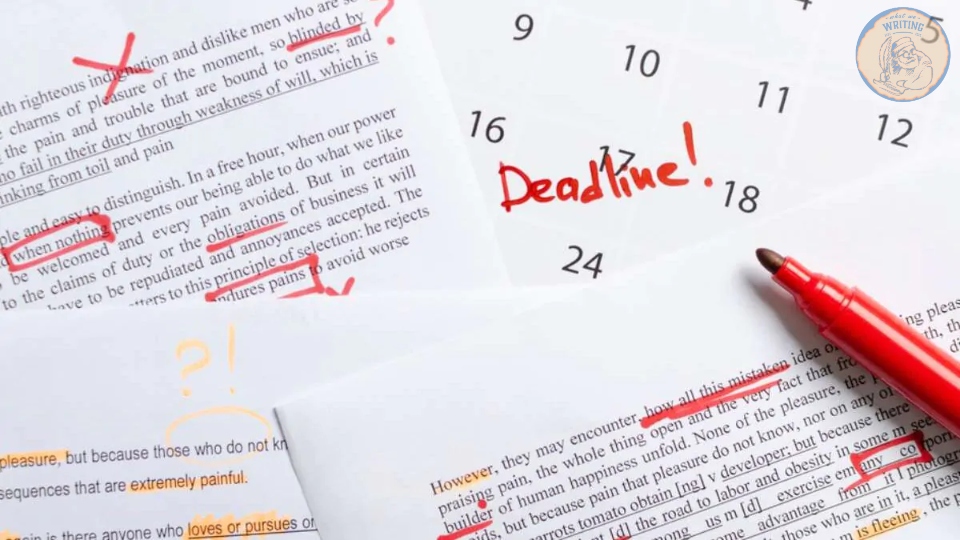
Editing your own book can feel overwhelming – how do you refine your writing without losing your voice? Whether you’re working on a novel, short story, or non-fiction project, learning how to self-edit a book is an essential skill to possess. While hiring a professional editor is always the dream, self-editing for writers helps strengthen your manuscript before it reaches another set of eyes. Today at What We Writing, we’ll guide you through the best self-editing tips, from fixing structural issues to polishing up sentences. You’ll find out how to edit your own writing effectively, spot common mistakes and tighten your prose without losing clarity. We’ll also present a self-editing checklist to make this process even smoother. So, ready to transform your manuscript? Here are our favourite self-editing techniques to help your writing shine – without losing your mind along the way!
Why Self-Editing Matters
Self-editing is an essential part of the writing process, offering several benefits beyond just polishing up your narrative. Whether you’re preparing your novel for publication or refining a short story, learning how to self-edit a book can make a huge difference. Here’s exactly why:
1. Saves Time and Money Before Hiring an Editor
Professional editing can be expensive and, the more unpolished your manuscript is, the more time (and money) an editor will need to fix it. By taking advantage of self-editing techniques first, you take away the number of revisions you need, making the process smoother and far more cost-effective.
2. Strengthens Your Writing Skills
Self-editing forces you to critically assess your work, improving your understanding of structure, pacing, and style. Over time, recognising and fixing common mistakes will help you become a stronger writer.
3. Helps Identify Your Own Patterns and Pitfalls
Every writer has their own habits – overused words, weak sentence structures, or pacing issues. By constantly editing your own writing, you’ll learn to spot these quirks and avoid them in future drafts. Mastering self-editing for writers not only sharpens your manuscript but also builds your confidence as an author.

Step-By-Step Self-Editing Process
Self-editing can feel overwhelming, but breaking it down into clear steps makes the process far more manageable. Here’s a structured approach to refining your manuscript without losing your mind.
1. Take a Break Before Editing
Once you’ve completed your first draft, fight back against the urge to begin editing immediately. Stepping away for a few days (or even weeks) gives you a fresh perspective, making it easier to spot weaknesses in the plot, pacing, and character development. Distance helps you read your work as a reader, not as a writer.
2. Begin with Big-Picture Edits (Structural Editing)
Before fine-tuning sentences, focus on the broader structure of your story:
- Are there any plot holes or inconsistencies?
- Does the pacing feel too slow or too rushed?
- Are the character arcs clear and satisfying?
Consider cutting some unnecessary scenes or rearranging sections to improve flow. This is also a great time to ensure themes are strong and subplots are resolved.
3. Focus on Sentence-Level Editing
Once your story’s structure is solid, hone in on sentence clarity and readability.
- Cut out redundant words and tighten your prose.
- Replace weak verbs with stronger, more precise alternatives.
- Switch passive voice in favour of active voice where possible for better engagement.
4. Eliminate Common Writing Mistakes
As we mentioned, we all have our own habits when we write – some overuse filler words, whereas others rely too much on adverbs. Pay close attention to
- Repetitive phrases or unnecessary words (e.g. “just”, “really”, “very”).
- Weak verbs that can be replaced with more vivid action words.
- Excessive adverbs (e.g. “he ran quickly” to “he sprinted”).
5. Polish Grammar and Punctuation
Even the best story suffers if typos and grammatical errors make it difficult to read.
- Use editing tools such as Grammarly or ProWritingAid to spot errors.
- Read your work aloud to identify awkward phrasing or missing words.
- Print out a paper copy – sometimes errors are easier to spot on paper than on-screen.
Check Out The Best Free Writing Tools
6. Use a Self-Editing Checklist
Before claiming your manuscript to be finished, run it through a final checklist:
- The story structure is cohesive and engaging.
- Characters have depth, development and consistent motivations.
- The pacing keeps the reader engaged.
- Sentences are clear and concise.
- Grammar, punctuation, and typos are cleaned up.
By following this self-editing process, you’ll refine your manuscript into something stronger and more polished.
When To Stop Editing & Find Help
Self-editing is essential but, at some point, you have to step back and let others take a look. Over-editing can drain the life of your writing, and fresh eyes – whether from beta readers, critique partners, or a professional editor – can catch issues you’ve become blind to. But, how do you know when it’s time to stop tweaking and start seeking feedback?
Signs You’ve Over-Edited
- Your writing feels flat. If you’ve revised so much that your sentences sound mechanical or lack personality, you may have over-polished.
- You’re changing things back and forth. If you constantly rework the same sentences without any real improvements, it’s time to stop.
- You’ve lost sight of the big picture. If you’re obsessing over minor word choices instead of focusing on storytelling, you may need fresh feedback.
- You’re stuck in a perfectionist loop. No book is ever ‘perfect’. At some point, you need to let it go.
When to Look for External Feedback
Beta Readers: Great for overall story flow, character development, and readability. Use them after structural edits but before a final polish.
Critique Partners: Fellow writers who can offer constructive criticism on pacing, dialogue, and clarity.
Professional Editors: If you’re preparing for publication, an editor can provide expert guidance on everything from developmental issues to line edits.
Knowing when to stop self-editing is just as important as knowing how to edit. Once you’ve done all that you can, getting some outside help will help elevate your work to the next level.
Check Out Our Guide To Finding Writing Partners
Wrap Up
Self-editing is one of the most valued skills a writer can develop. By stepping back, analysing your work critically, and applying some structured self-editing techniques, you can transform a rough draft into a polished, compelling manuscript. Whilst the process might be tricky to begin with, it ultimately strengthens your writing, sharpens your storytelling, and prepares your book for the next stage – whether that’s beta readers, professional editing or publishing!
Remember, editing takes time. It’s easy to become overwhelmed but trust the process. Each round of revisions takes you closer to the best version of your story. And, when you’ve reached the end, don’t hesitate to seek out feedback – outside perspectives can provide insights you may have missed.

James has been passionate about storytelling ever since he could hold a pen. Inspired by the epic fantasy and historical dramas he devoured in his youth, his work now centers on dark, psychological tales featuring intense, introspective characters and atmospheric, gothic undertones. In 2025, he founded What We Writing to share his creative journey and the lessons he’s learned along the way with fellow writers and passionate storytellers.

