
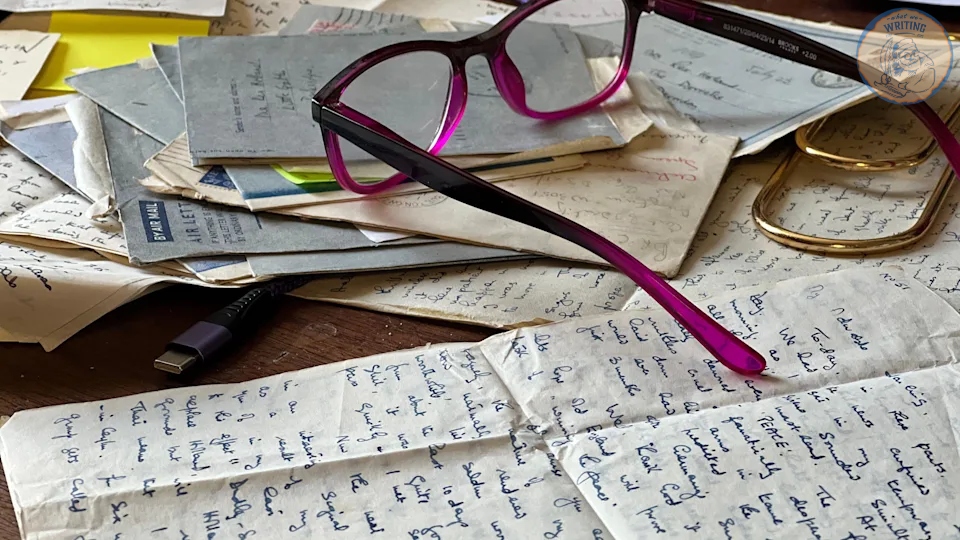
Epistolary writing is a storytelling technique that unfolds through personal documents – letters, diary entries, emails, or even text messages. Instead of a traditional narrator, the story is revealed through the written voices of its characters, giving readers an intimate glimpse into their thoughts, emotions, and secrets. This form has deep roots within literature, from the haunting letters and journal entries in Dracula to the heartfelt exchanges in The Color Purple. Modern writers have also embraced it in fresh ways, using digital communication such as emails and instant messaging to conjure contemporary epistolary stories. Here at What We Writing, you’ll find a collection of epistolary writing prompts designed to help you experiment with telling a story through letters (and beyond). Whether you’re exploring character voice, building tension, or simply looking for a unique way to spark creativity, these prompts will guide you into the world of epistolary storytelling.
What Is Epistolary Writing?
Epistolary writing is a form of storytelling told through documents – most often letters, but also journals, diary entries, emails, or even text messages. Instead of leaning on a single narrative, the story emerges piece by piece through what characters choose to write, reveal, or sometimes hide.
What makes this style so powerful is its intimacy. A letter or diary feels private, like the reader is peering into someone’s most personal thoughts. It’s also an excellent way to explore character perspective, since each document mirrors the writer’s unique voice, biases, and emotions. An unreliable narrator can become even more compelling in epistolary format, because what they omit or exaggerate shapes the whole narrative.
Writers who want to experiment with fresh storytelling approaches often turn to this format. If you’ve ever wondered how to write an epistolary story, the key is in leaning into the immediacy of the medium – whether it’s the formality of a handwritten letter, the casual tone of a text, or the confessional style of a journal entry. Each form presents a different lens for revealing story and character.

How To Use Epistolary Prompts
Epistolary prompts work best when you treat them as flexible story-starters, rather than rigid assignments. Here are a few of our favourite tips on how to make the most out of them:
- Write multiple letters or entries. A single letter can spark a story, but layering several over time adds depth and reveals how characters change.
- Experiment with different voices. Try writing two or more perspectives – friends, rivals, or complete strangers – and see how their personalities shine through their words.
- Play with unreliable narrators. Since readers only see what’s written, gaps and omissions create tension. What isn’t said can be just as revealing as what’s confessed.
- Mix up the mediums. A love letter feels very different from a frantic text message or a centuries-old journal entry. Changing the format can immediately shift the tone of your story.
These prompts can grow into anything you like – a quick flash fiction piece, a short story, or even the seeds of a novel experiment. Don’t be afraid to start small, allow the characters’ voices to guide you, and see where the letters take the narrative.
Check Out These Great Short Story Writing Prompts
Epistolary Writing Prompts
Letters Between Strangers
- A letter is delivered to the wrong address, and the recipient decides to write back.
- Two strangers on a train exchange letters left in the same seat.
- A pen pal program connects two people from vastly different backgrounds.
- Someone receives a letter intended for the past tenant of their apartment – and keeps replying.
- A message in a bottle washes ashore decades later.
- A fan writes to their favourite celebrity – and surprisingly gets a response.
- Two strangers keep a letter alive by leaving letters inside a library book.
- A mysterious letter arrives with no return address, only signed “A Friend”.
- A traveller leaves letters hidden in hotel rooms for the next guest to find.
- Two strangers connect through accidental emails, one typo away from never meeting.
Family & Secrets
- A child discovers letters that reveal a buried family scandal.
- A soldier’s letters home contain a secret code only one family member understands.
- Siblings argue over an inheritance via letters.
- A parent leaves behind sealed envelopes, each containing a confession.
- A diary entry uncovers the truth about a long-forgotten ancestor.
- A teenager writes unsent letters to a parent they’ve never met.
- A grandparent passes down wisdom – and hidden regrets – through journals.
- A family member reveals their true identity only after death, through letters.
- A cousin’s letters hint at a curse that runs in the family.
- Letters between estranged relatives slowly rebuild (or destroy) trust.
Romance Through Letters
- Two people fall in love entirely through letters, never meeting face to face.
- A long-distance couple communicates through emails but begins to drift apart.
- A soldier writes love letters that never reach their intended recipient.
- Someone writes anonymous love notes and slips them under a neighbour’s door.
- A breakup letter is never sent – years later, it is found.
- A person discovers a stack of old love letters written to their partner – but not from them.
- Two characters fall in love by accident after their letters cross paths.
- A person keeps writing to a lover who has passed away.
- A misdelivered Valentine’s card sparks a chain of correspondence.
- A character receives love letters signed by someone who insists they’ve met in another life.
Historical & Future Letters
- A time capsule letter is unearthed far earlier than intended.
- A prisoner in the 18th century writes desperate letters that never reach freedom.
- Letters between two suffragettes reveal both hope and fear for the future.
- A letter from the Titanic resurfaces, changing the way history is remembered.
- A medieval scribe records their town’s darkest secrets in coded letters.
- A future astronaut writes letters to Earth, unsure if they’ll ever be delivered.
- A dystopian society bans written words – so letters must be smuggled.
- Messages are sent across centuries through a mysterious mailbox.
- A historical figure’s private letters reveal a truth that contradicts the history books.
- A character receives a letter from their own future self, warning them of a choice.
Unexpected Mediums
- A series of unsent text messages tells the story of a friendship gone wrong.
- A group chat transcript reveals a mystery in real time.
- Notes passed in class evolve into a secret relationship.
- A diary is written by two different people, years apart, in the same notebook.
- Post-it notes left around a house reveal the unravelling of a marriage.
- A chain of voicemails transcribed into text uncovers a crime.
- A social media DM conversation spirals into obsession.
- Sticky notes on a communal fridge tell the story of roommates at war.
- A lost phone contains drafts of unsent emails telling someone’s life story.
- Emergency broadcasts are pieced together to form a survival narrative.
Wrap Up
Epistolary storytelling invites writers to explore voice, intimacy, and perspective in ways that traditional narration can’t always capture. By using these epistolary writing prompts, you can experiment with telling a story through letters, diaries, emails, or even text messages – and discover how much character, tension, and emotion can be revealed through just a few written words.
Now it’s your turn: Which prompt sparked your imagination? Have you read or written an epistolary story before? Share your thoughts and favourite examples in the comments – we’d love to hear how you use this form in your writing.
If you enjoyed this post, don’t forget to check out some of our other creative writing prompts for even more inspiration, and subscribe so you never miss new ideas to fuel your storytelling.

James has been passionate about storytelling ever since he could hold a pen. Inspired by the epic fantasy and historical dramas he devoured in his youth, his work now centers on dark, psychological tales featuring intense, introspective characters and atmospheric, gothic undertones. In 2025, he founded What We Writing to share his creative journey and the lessons he’s learned along the way with fellow writers and passionate storytellers.

