
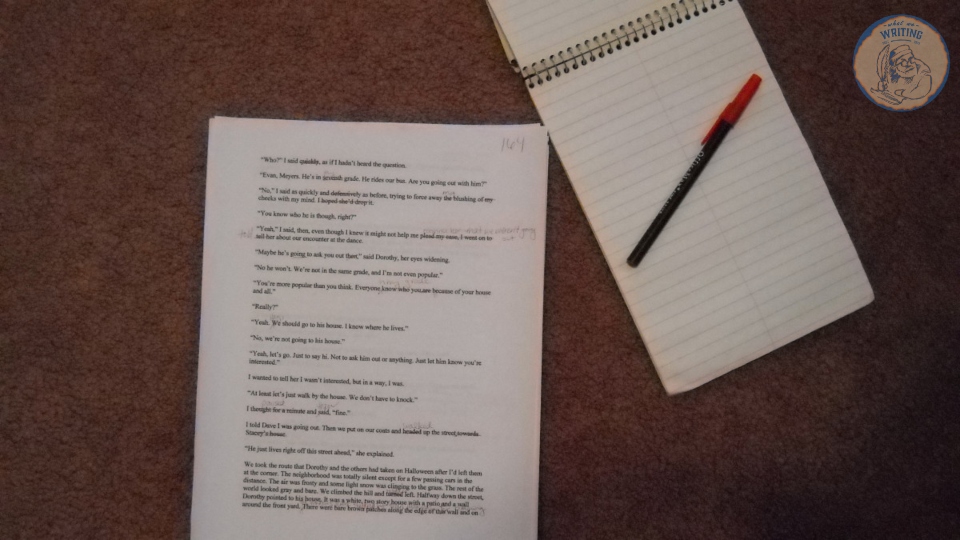
If you’ve ever attempted writing a first draft of a novel, you’ll be all too familiar with this feeling: the words are clunky, the dialogue sounds unrealistic, the plot feels messy, and there’s a little voice in your head reminding you this is terrible. For most of us writers, the rough draft is where excitement turns into self-doubt – fast.
This is because a rough draft isn’t just about getting words down on the page. It’s about sitting with uncertainty. You’re not sure if your story works. You don’t fully understand your characters. And, when compared to polished books already on the shelves, your writing can feel awfully messy.
But that mess? That’s exactly the point.
A rough draft isn’t supposed to be any good. It’s meant to exist. It’s your permission slip to write poorly, take some wrong turns, and discover your story as you go. Every novel – even the ones that feel totally effortless to read – began as rough, imperfect first drafts.
In this post, you’ll discover exactly what a first draft is, why it matters so much, and how to approach writing your novel’s first draft without ever getting stuck or giving up. We here at What We Writing will take you through a realistic drafting process, share practical tips you can actually use, and highlight the most common rough draft mistakes so you can avoid sabotaging yourself before your story even has the chance to get going!
What Is A Rough Draft Of A Novel? (And What It’s Not)
A rough draft is the very first complete version of your novel, written to explore the story rather than perfect it. Its aim isn’t to be polished or publishable – it’s to plant the whole story on the page so that you have something to work from.
In plain terms, a rough draft is you telling yourself the story for the first time.
What a Rough Draft Is
A novel rough draft is:
- Incomplete – scenes might be missing, underwritten, or rushed through
- Messy – the prose is uneven, the dialogue clunky, and the pacing off
- Exploratory – you’re still working out the plot, characters, and themes as you go
At this stage, it’s totally normal not know exactly where the story is headed or how everything comes together yet. The rough draft exists so you can discover those answers.
What a Rough Draft Isn’t
A rough draft is not:
- Polished – grammar, word choice, and style all come later on
- Final – this version is not the one readers will see
- Ready for feedback or publication – it’s a private work in progress
If you’re trying to make your rough draft read like a finished novel, you’re asking it do a job it simply isn’t designed for.
Think of the rough draft as the groundwork for a house. It might look rough and unglamorous, but without it, nothing else can be built.

Before You Start Writing Your Rough Draft
Before you dive headlong into writing your novel’s rough draft, it helps to do just a little light preparation. Not the sort that turns into endless planning or procrastination – just enough to make starting (and continuing) a little easier.
This stage of prewriting for novels isn’t about tying yourself into a rigid plan. It’s about giving yourself the support you really need to finish the first draft.
Do You Need an Outline?
The age-old question. Do you need a novel outline to begin writing a novel? The honest answer? It all depends on how your brain works.
Writers typically fall somewhere on the spectrum between plotters and pantsers:
- Plotters like to plan ahead. They outline scenes, map story beats, and feel more confident knowing where the story is going.
- Pantsers prefer writing “by the seat of their pants.” They discover the story as they go and can feel creatively stifled by too much planning.
Both approaches are equally valid – and both can produce strong rough drafts.
When Outlining Helps
Outlining can be helpful if you:
- Usually abandon projects halfway through
- Get stuck once the initial excitement fades
- Feel overwhelmed by a blank page
- Want reassurance that your story has a beginning, a middle, and an end
Even a loose outline – a few bullet points or rough three-act structure – can serve as a safety net when the motivation dips.
Check Out Our Guide On How To Write The Three-Act Structure
When Outlining Hurts
On the flip side, outlining can slow things down if you:
- Begin procrastinating in the planning phase
- Feel boxed in by predefined plot points
- Lose interest once you “know” the story
- Keep rewriting the outline rather than writing the first draft
If outlining makes you feel bored or blocked, it’s usually a better idea to just start writing and allow the draft to be the planning stage.
Check Out Our Guide On How To Write A Novel Outline
Set a Rough Draft Goal (Not a Perfect One)
Once you’ve landed on how much you want to plan, the most important prewriting step is setting a goal that prioritises progress over perfection.
When writing a novel first draft, vague intentions such as “I’ll write when I feel inspired” rarely ever work. Clear, realistic goals make it far more likely you’ll finish.
Word Count vs Time-Based Goals
There’s no single best way to measure progress; these are the two most effective options:
- Word count goals (for example, 500-1,000 words per day)
- Great if you prefer clear milestones
- Encourages forward momentum
- Time-based goals (for example, 30-60 minutes sessions per day)
- Helpful if your writing speed varies
- Reduces pressure on “bad writing days”
Why Deadlines Matter
Deadlines give your rough draft structure. Without them, it’s easy for weeks – or even years – to slip by without any real progress. A rough deadline doesn’t have to be strict, but it should create a sense of commitment.
Even telling yourself “I want this draft finished in three months” can totally transform how seriously you show up to write.
Example Rough Draft Goals
Here are a few realistic, rough-draft-friendly goals:
- Write 500 words a day, five days a week
- Write for 30 minutes every morning before checking your emails
- Find the rough draft in 12 weeks, no matter how messy it is
- Commit to one writing session per day, even if it’s short
Remember: the goal of a rough draft is not quality – it’s completion. The best goal is the one that gets you to the final line in your manuscript.
How To Write A Novel Rough Draft (Step-By-Step)
This is our step-by-step approach that is designed to help you move forward – even when the draft feels messy, awkward, or just straight up bad.
Step 1: Write Fast and Write Ugly
The single most important rule of writing a first draft is this: speed matters more than quality.
A rough draft is not the time for perfect sentences or clever metaphors. It’s the time to get the story out of your head and onto the page – warts and all. Give yourself full permission to write badly, because bad writing can be fixed. Blank pages can’t.
To keep yourself moving:
- Turn off spellcheck if it distracts you
- Don’t reread yesterday’s chapter before starting
- Resist the urge to “just tweak” earlier scenes
Editing whilst drafting slows you down and breaks your momentum. If something sounds wrong, make a note and keep going. You’ll come back to it later, with fresh eyes and a complete story to work with.
Step 2: Don’t Fix Plot Holes – Leave Placeholders
Every rough draft contains its fair share of plot holes. Trying to fix them as soon as they appear is one of the easiest ways to stall a novel.
Check Out Our Guide On How To Stay Focused While Writing
Instead, use placeholders.
Many writers use brackets or capitalised notes to flag the problem without needing to stop, such as:
- [RESEARCH THIS]
- [ADD ARGUMENT BETWEEN THEM]
- [FIGURE OUT HOW HE ESCAPES THIS]
You can also leave yourself quick reminders like “This doesn’t work yet” or “Fix motivation later.” The aim here isn’t to solve the problems now – it’s to keep the story moving forward.
This approach keeps your momentum going and prevents small problems from upending the entire draft.
Step 3: Keep Moving Even When You Feel Stuck
Getting stuck is part of writing a novel first draft. It doesn’t mean you’re doing it wrong – it means you’ve reached a point where the story needs to be discovered.
When that happens, try one of these momentum-saving tricks:
- Skip the scene and move on to the next one
- Write a summary of what needs to happen rather than a full prose
- Jump ahead to a scene you’re excited to write
And yes, you can even write the ending early.
It’s a controversial play, but for some writers, knowing where the story is heading makes the middle far easier to write. You can always change the ending later. What matters now is getting there.
The rough draft doesn’t need to be in written order. It just needs to be written.
Common Rough Draft Mistakes (And How To Avoid Them)
Most writers don’t struggle with writing a rough draft because they lack ideas or talent. They struggle because they unknowingly sabotage themselves while the draft is still fragile.
Understanding these common first draft mistakes – and knowing how to avoid them – can make all the difference between an abandoned project and a finished novel.
Editing Too Early
One of the most common rough draft mistakes is editing as you go. Tweaking sentences, fixing grammar, and rewriting paragraphs might all feel productive, but it slows your progress right down to a crawl.
How to avoid it: Treat drafting and editing as two separate things. When you spot a problem, leave a note, and keep writing. Save all editing for after you’ve reached the end of your draft.
Comparing Yourself to Published Authors
Comparing your rough draft to a finished, polished novel is wildly unfair – and exceptionally demoralising. Published books have gone through multiple sweeps of revisions, edits, and polishes. Your first draft hasn’t had such luxuries.
How to avoid it: Remind yourself that you’re comparing a process to a product. If comparison creeps in, stop reading fiction while drafting, or consciously read with the reminder that you’re viewing a final result, not a messy beginning.
Restarting Instead of Finishing
Many writers restart their novel over and over again, convinced the opening isn’t good enough. In reality, restarting is often just perfectionism in disguise.
How to avoid it: Keep going, even if the early chapters feel all wrong. A finished rough draft gives you the perspective you need to fix it later on. An unfinished draft gives you nothing to revise.
Obsessing Over Word Choice
Spending ten minutes deciding on the perfect word in a rough draft is a fast way to lose momentum. Precision belongs in revisions, not in the first pass.
How to avoid it: Use the simplest word and move on. If the exact phrasing matters, highlight it or leave a note. The goal here is clarity now – beauty comes later on.
Making Mistakes during a rough draft isn’t a sign that you’re failing. It’s a sign that you’re actually doing the work. Avoiding these traps doesn’t make your draft perfect – but it will help you finish it, and that’s what really matters.
How To Finish Your Rough Draft (Even Motivation Dies)
Almost every single new novel hits a point where the initial excitement wanes. The shiny new idea is gone, the ending feels far away, and writing soon begins to feel like a chore. This mid-draft slump is totally normal – and it’s one of the biggest reasons why writers never finish their rough drafts.
The problem here isn’t a lack of talent or commitment. It’s that motivation is unreliable. Finishing a rough draft means learning how to keep going without it.
Accept That the Slump Is Part of the Process
If your energy dips halfway through writing a novel, it doesn’t mean the story is broken. It means you’ve moved past the easy part and into the stretch where persistence matters more than inspiration.
Once you expect this phase, it loses a lot of its power. You’re not failing – you’re precisely where most writers wind up.
Use Writing Sprints to Build Momentum
When the draft feels overwhelming, stop thinking about finishing the novel and focus on a much smaller task.
Writing sprints work because they remove the pressure:
- Set a timer for 10-25 minutes
- Write continuously until it ends
- Don’t edit or reread
Even a short sprint can break through resistance, and one sprint usually leads into another once you’re moving.
Lower Your Daily Goals (Temporarily)
During a slump, sticking rigidly to high word count goals can dramatically backfire. Missing them repeatedly can make you feel like giving up altogether.
Lowering your goal isn’t quitting – it’s adapting.
Try:
- 200 words rather than 1,00
- 10 minutes instead of an hour
- One messy scene over a full chapter
Small wins build your confidence, and confidence makes it far easier to keep showing up.
Write “Bad on Purpose”
Sometimes the fastest way to finish a rough draft is to stop trying altogether.
Give yourself permission to write scenes badly on purpose. Flat dialogue. Rushed descriptions. Obvious transitions. None of it matters right now.
You’re not writing the novel anyone will ever see – you’re writing the version that allows the real novel to exist later on.
Finishing a rough draft isn’t about feeling inspired 24/7. Rather, it’s about staying in the chair long enough for the story to take shape. Be kind to yourself during this stage. Messy progress is still progress – and every imperfect page brings you closer to the end.
Wrap Up
If there’s one thing to remember about writing a novel rough draft, it’s this: your only job is to finish.
Not to make it beautiful. Not to make it clever. Not to make it sound like a book you’d proudly hand to someone else. The rough draft exists so the story can exist at all – and that only happens if you reach the finale.
Messy chapters, awkward dialogue, plot holes, and half-baked ideas are not signs you’re doing everything wrong. They’re signs that you’re doing precisely what a first draft is meant to do. Every page you write, no matter how imperfect, is progress.
So let yourself finish badly. Let yourself write scenes that don’t quite work yet. Trust that clarity comes after completion, not before it.
If you’re in the middle of a rough draft now, stick at it. And if you’ve finished one – even if it feels especially rough – that’s something worth celebrating.
And if you’re currently drafting, we’d love to hear about it! Are you outlining or writing by the seat of your pants? What’s been the hardest part of your rough draft so far? Drop a comment below, and let’s talk – writing doesn’t need to be a solo sport!

James has been passionate about storytelling ever since he could hold a pen. Inspired by the epic fantasy and historical dramas he devoured in his youth, his work now centers on dark, psychological tales featuring intense, introspective characters and atmospheric, gothic undertones. In 2025, he founded What We Writing to share his creative journey and the lessons he’s learned along the way with fellow writers and passionate storytellers.

