
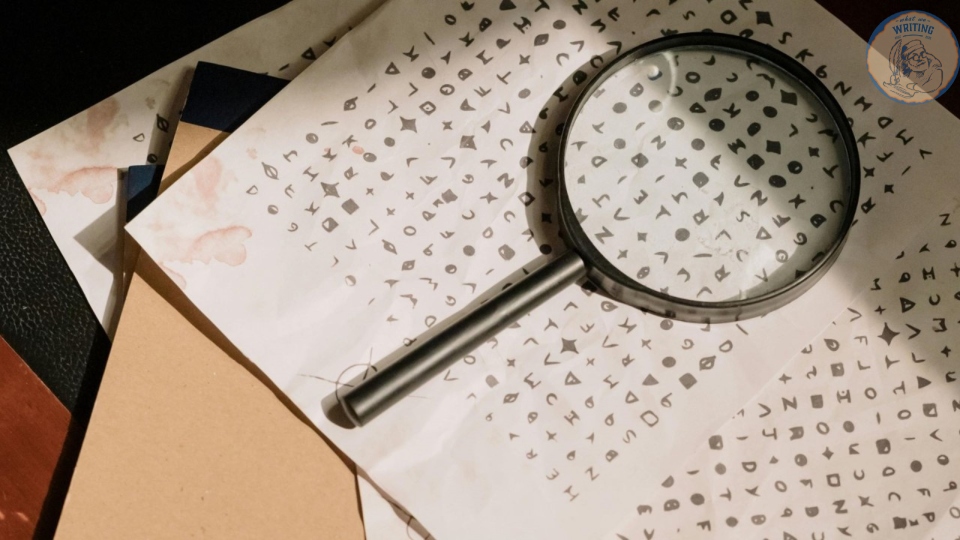
Found objects are the heartbeat at the centre of every great mystery story. A long-lost photograph, a key with no lock, a phone that doesn’t belong to anyone – these small unearthings immediately raise questions, point toward secrets, and pull a character (and the reader) into the unknown. That’s what makes them such effective story starts. These mystery writing prompts are all designed around objects that spark suspicion, uncover hidden pasts, or suggest a crime waiting to be solved. Every prompt here begins with a single, intriguing discovery and leaves just enough unanswered to allow your imagination to take on the heavy lifting.
Whether you’re just starting out on your writing journey, on the hunt for low-pressure inspiration, a short story writer chasing a sharp hook, or a novelist looking for a compelling opening scene, these prompts are designed to work at any length – from flash fiction to full-length mysteries.
How To Use These Mystery Writing Prompts
These mystery prompts are all designed to be flexible, so you can use them whichever way suits your writing style or current WIP. Think of them as mystery story starters as opposed to fully formed plots – each one gives you a question, but the answer is still yours to find.
You can use these mystery writing prompts to:
- Write a short mystery story, focusing on how the object was found and why it matters.
- Create flash fiction, using the object as the central reveal or the final twist.
- Kick-start a novel opening, allowing the found object to introduce the central mystery.
- Practice writing exercises, such as exploring different suspects, timelines, or points of view.
- Warm up before a longer session, particularly if you’re stuck or facing a blank page.
These writing prompts for mystery writers work just as well for snappy creative bursts as they do for crafting bigger, more complicated ideas – the level of depth is up to you!

Check Out Our Guide On How To Plant Clues In A Mystery
Mystery Prompts Inspired By Found Objects
Each of these mystery prompts begins with a single found object – something misplaced, forgotten, or impossible – and asks you to uncover how it got there and what it’s hiding. Use them as short story starters, novel openings, or standalone writing exercises.
Found Objects That Shouldn’t Exist
- A smartphone found buried in the woods – dated five years in the future and full of photos of people who are still alive.
- A house key discovered in a cafe drawer that opens a door in a neighbourhood that was demolished years ago.
- A library book returned with notes in the margins detailing shocking crimes that haven’t been committed yet.
- A passport bearing your protagonist’s name, photo, and signature – issued in a country they’ve never been to.
- A wedding ring engraved with a date yet to happen, found at the bottom of a lake.
Found Objects Linked to a Crime
- A wristwatch stopped at the precise minute a missing person was last seen.
- A bloodstained receipt tucked inside a library book, listing items no one can remember buying.
- A wallet found at a crime scene containing just a single photograph – no cash, no ID.
- A pair of gloves discovered in a public place, with one fingertip carefully cut away.
- A weapon turned in anonymously, accompanied by a note claiming it was never used – despite evidence to the contrary.
Personal Objects With Dark Histories
- A childhood toy found during a police search, belonging to someone who disappeared years ago.
- A handwritten diary discovered in an attic, written by someone who officially never existed.
- A piece of jewellery passed down through generations, each owner meeting the same unexplained fate.
- An old photograph showing your protagonist standing beside a stranger they don’t recall meeting.
- A love letter found in an old thrift shop, signed by a name linked to an unsolved case.
Anonymous or Mysterious Objects
- A locked suitcase abandoned at a train station with no tags, no fingerprints, and no damage.
- A set of keys left on a park bench each morning, always in the same position.
- A sealed envelope delivered with no address, containing a map marked with a red X.
- A notebook found in a cafe, filled with detailed observations of people currently inside.
- A voicemail recording discovered on a discarded phone, timestamped before the device was manufactured.
Objects That Change the Mystery Over Time
- A missing poster that subtly morphs each time it’s seen, altering the details of the person described.
- A book whose final chapter rewrites itself after every reading.
- A piece of evidence that appears clean during the day, but reveals hidden markings at night.
- A letter that gains new sentences each time it’s unfolded.
- An object returned to a lost-and-found desk repeatedly – even after being claimed and taken home.
Ways To Deepen A Found Object Mystery
If you want to push these prompts beyond the initial idea, a few small creative decisions can fuel tension, complexity, and emotional weight. Use the techniques below to transform a simple discovery into a fully layered mystery.
- Add a time limit. Give your characters a ticking clock – the object needs to be returned, decoded, or hidden again before something irreversible happens.
- Change the point of view. Tell the story from the perspective of someone connected to the object but not in control of the truth, such as a bystander, suspect, or witness.
- Introduce an unreliable narrator. Allow the character to misinterpret the object, omit key details, or lie to the reader or themselves.
- Tie the object to a secret from the past. Make the discovery reopen an old wound, an unresolved crime, or a buried relationship.
- Let the object mislead. Allow the item to point toward the wrong conclusion before revealing what really matters.
- Limit what can be explained. Decide early what cannot be answered, and build tension around the gaps.
These mystery writing ideas and creative writing techniques work particularly well for short stories and novel openings, helping to transform a found object into the core of a compelling, suspense-driven plot.
Wrap Up
Found-object mysteries thrive on the unanswered questions – and the right discovery can unlock a whole story. These mystery writing prompts are all designed to spark curiosity, tension, and possibility, whether you’re drafting flash fiction or opening a longer work. If one of these prompts pulls you in, feel free to share what you’re working on or pass the list along to another writer who loves a good mystery!

James has been passionate about storytelling ever since he could hold a pen. Inspired by the epic fantasy and historical dramas he devoured in his youth, his work now centers on dark, psychological tales featuring intense, introspective characters and atmospheric, gothic undertones. In 2025, he founded What We Writing to share his creative journey and the lessons he’s learned along the way with fellow writers and passionate storytellers.

