
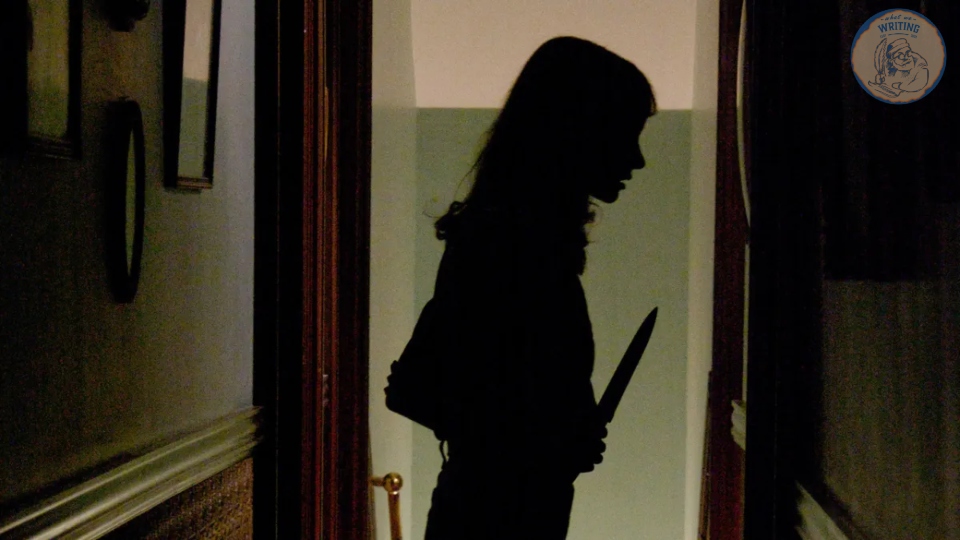
Slow burn horror sounds easy enough on paper – draw out the tension, hold back the scares, allow the dread to build. However, the reality is that it’s one of the trickiest genres to get right. Without careful control, a slow opening can feel like nothing is happening at all, and it’s surprisingly easy to lose readers before the story ever takes hold.
The challenge here is in knowing how to keep the pages turning whilst simultaneously delaying the payoff. You’re not just spinning a story – you’re carefully managing unease, planting subtle disruptions, and guiding the audience toward something that they can’t quite see yet.
If you’ve ever wondered how to write slow burn horror without it falling flat, it comes down to precision. From how you build tension in horror writing to how you shape atmosphere and control pacing, every decision matters. Done well, slow burn horror doesn’t just scare – it lingers long after the final page.
1. Start With Normality (Then Disturb It)
One of the most effective ways to kickstart a slow burn horror story is by rooting the reader in something familiar. A quiet village, a new home, an ordinary relationship – whatever your setting, it needs to feel stable and recognisable. This feeling of normality lends something for the audience to trust, which makes it far easier to unsettle them later on.
Horror thrives on contrast. If everything feels off from the get-go, there’s nowhere for the tension to build. However, when a story starts off in a world that appears to be safe, even the smallest disruptions can soon begin to feel significant.
A passing comment that doesn’t land right. A character reacting a little too slowly. A detail that changes when it shouldn’t. On their own, these moments are all easy enough to dismiss – yet, together, they create a growing feeling that there’s something wrong.
This is where creeping dread starts. The key here is subtly. You’re not trying to scare your readers instantly – you’re trying to make them feel uneasy. Let the inconsistencies linger. Don’t explain them too quickly. Allow the audience to spot the patterns before your characters do.
Over time, that initial feeling of normality begins to erode. And once the reader realises that they can’t completely trust the world you’ve built, even the smallest detail can feel threatening.

Check Out These Horror Prompts Based On Unsettling Places
2. Build Atmosphere Before Plot
In slow burn horror, atmosphere does just as much of the heavy lifting as the plot – and sometimes even more. Before anything overtly frightening happens, the feeling of the story needs to take hold. This is why so many of the most influential atmospheric horror novels linger in your mind long before the horror fully reveals itself.
Think of your setting as a character in its own right. It shouldn’t just sit in the background – it should influence mood, behaviour, and tension. A house that feels too quiet. A landscape that seems to stretch on endlessly. A room that never quite warms up. When the environment is present, it begins to mould how the reader experiences every scene.
If you’re wondering how to create atmosphere in horror, it often comes down to sensory detail. Focus on what your character hears, feels, and notices – particularly the things that don’t appear important to begin with. The hum of something that shouldn’t be on. The absence of sound where there should be noise. The texture of a space that feels wrong in some subtle way. These details build immersion, but they also plant unease.
Over time, the setting should start to feel oppressive, as though it’s closing in around the character. The aim here isn’t to overwhelm the audience with description, but to create a persistent mood they can’t quite shake. When done well, the atmosphere alone can make a scene feel tense – even when nothing appears to be happening on the surface.
3. Focus On Psychological Tension
At the core of any psychological horror slow burn is a simple concept: what you don’t see is usually is often far more frightening than what you do. Rather than focusing on visible threats, slow burn horror leans into uncertainty – allowing your audience’s imaginations to fill in the gaps. The unknown creates room for fear to grow, and that fear is the sort that lingers far longer than anything explicitly shown on the page.
This is where perception becomes a powerful tool in your arsenal. If the reader can’t fully trust what’s happening – or how it’s being interpreted – the tension naturally grows. Small inconsistencies in memory, behaviour that doesn’t quite align, or moments that feel ever so slightly distorted can all point to something being wrong, but never reveal what it is.
This sort of instability keeps your audience questioning everything, which is essential when writing psychological horror.
Internal conflict also plays a key role. Fear isn’t just external – it’s something that the character carries with them. Doubt, guilt, obsession, denial – these emotions can heighten tension just as much as any supernatural element. The more the character struggles to understand or accept what’s going on, the more unsettling the story becomes.
You can see this clearly in stories like The Silent Patient, where the tension stems just as much from what’s hidden within the mind as from the mystery itself. In slow burn horror, the real threat often isn’t just what’s out there – it’s what’s happening beneath the surface.
4. Control The Pacing (Don’t Rush The Fear)
Pacing is what makes or breaks a slow burning horror story. Too fast, and the tension never has the time to stick. Too slow, and nothing feels like it’s happening. The balance stems from knowing when to hold things back – and when to allow the pressure to build.
Slow pacing in horror doesn’t mean dragging out scenes for the sake of it. It means allowing moments to breathe. Give your characters the opportunity to spot things, to question them, to sit in their discomfort. A glance that lingers too long. A silence that stretches just a little further than it should. These pauses create space for unease to grow naturally, rather than having to force it.
It’s also important to avoid unveiling too much too soon. Once the horror is fully explained, the tension usually fades. Rather, focus on withholding just enough details to keep the audience curious and disturbed. Allow them to piece things together slowly, even if their conclusions aren’t always correct.
The key here is escalation. You’re not lingering in one emotional state – you’re moving through it. Begin with subtle unease, where something feels slightly off. Let that develop into dread, where the character begins to sense real danger. And finally, allow it to tip into fear, where the threat becomes truly undeniable.
When you build suspense gradually, every stage feels earned. And, by the time the horror fully emerges, the reader is already primed to feel it.
Check Out Our Complete Guide On How To Control Narrative Pacing
5. Withhold Information Strategically
One of the most important weapons in your writing arsenal for slow burn horror is restraint. It can be tempting to explain each strange detail or clarify every unsettling moment; however, doing so too early often deflates the tension. Rather, the aim here is to hold back just enough to keep the audience uneasy and curious.
When you don’t explain everything, you invite the reader to actively take part in the story. They begin filling in the gaps themselves, and often what they conjure is more disturbing than anything you could have explained outright. This is where ambiguity becomes a strength, rather than a weakness. A half-heard conversation, a missing memory, a detail that doesn’t quite add up – these moments linger because they resist any easy explanations.
For building suspense gradually, ambiguity is vital. It allows tension to accumulate without resolution, creating a sense that something is always just out of reach. The audience should feel like they’re circling a truth they can’t quite grasp yet.
The key here is control. You’re not withholding information randomly – you’re choosing what to reveal and when, with intention. Each withheld detail should serve a purpose, whether it’s deepening the mystery, reinforcing the atmosphere, or heightening the psychological tension.
When done well, this approach keeps the audience hooked without giving them the relief of full understanding. And in horror, that lack of certainty is often where the real fear resides.
6. Deliver A Payoff That Feels Earned
A slow burn horror story only works if the ending justifies the patience it takes to get there. When you’ve spent time carefully building tension, atmosphere, and psychological unease, the payoff needs to escalate in a way that feels meaningful – not sudden, and definitely not underwhelming.
One of the biggest risks that comes with slow burn horror is anticlimax. If your story builds too long without a strong resolution, the audience can feel as though the tension has never fully paid off. That’s why the final stretch needs to deliver a clear shift – something that changes the reader’s understanding of everything that came before.
There are a number of ways to handle this payoff. One approach is emotional devastation, where the horror lans not through spectacle, but through impact on the characters – loss, betrayal, or irreversible change.
Another is psychological revelation, where the truth behind the tension is finally exposed, reframing everything in a disturbing new light. And, of course, there’s the full horror reveal, where the story finally reveals what has been lurking underneath the surface all along.
Whichever direction you land on, the key is escalation. The ending should feel like a natural but intensified continuation of everything that has come before it. The unease then becomes dread, the dread grows into fear, and the fear becomes something unavoidable.
When the payoff is done well, it doesn’t just revolve the story – it reinforces it. It makes the earlier quiet moment feel heavier in hindsight, and ensures the horror doesn’t end just because the book’s been closed.
Check Out Our Guide On How To Write A Fulfilling Resolution
Common Mistakes When Writing Slow Burn Horror
Writing slow burn horror can be tough because the same techniques that make it so effective can also make it all fall apart if they’re not handled carefully.
Slow Pacing
One of the most common issues is simply being too slow. If nothing meaningful is happening for too long, the tension stops building and begins fading. Rather than creeping dread, the reader is left feeling disconnected from the story.
Lack of Escalation
Another major problem we’ve seen in slow burn horror novels is a lack of escalation. Slow burn doesn’t mean static. The story should be constantly shifting from unease to dread to fear, even if those changes are subtle. Without that progression, the narrative can feel like it’s circling the same emotional space without ever propelling forward.
Over-Explaining
Over-explaining is another easy pitfall to fall into. The instinct to clarify every little strange detail or fully explain the horror can actually weaken the story. Ambiguity is usually what makes slow burn horror effective – once everything is spelt out, the tension tends to evaporate.
Unfulfilling Endings
Finally, a weak or rushed ending can undo all the careful build-up. If the payoff doesn’t feel earned, or if the story suddenly accelerates without delivering a satisfying finale, the audience is left with a feeling of frustration rather than impact. The ending should feel like a natural escalation of everything that came before it, not an afterthought.
Avoiding these traps is what separates a forgettable story from one that truly lingers. Slow burn horror works best when every decision – pacing, detail, and revelation – is intentional and carefully combined.
Check Out Our Guide On How To Write Short Horror Stories
Wrap Up
Slow burn horror continues to linger because it doesn’t rely on quick shocks – it builds something far more lasting. When tension is allowed to grow gradually, it seeps into the reader’s mind in a way that fast scares usually can’t replicate. The unease doesn’t just exist in isolated moments; it accumulates, reshapes familiar spaces, and changes how the story is experienced as a whole.
What makes this style so effective is its emotional persistence. Even after the story reaches its resolution, the atmosphere, uncertainty, and psychological tension tend to stick around. It isn’t just about what happened – it’s about how long the feeling sticks with you afterwards.
Unlike instant scares that fade quickly, slow burn horror creates lingering discomfort. And that’s precisely why it continues to resonate long after the final page is turned.
If You Want To See How All This Works In Practice, Check Out The Best Slow Burn Horror Novels On Our Sister Site, What We Reading

James has been passionate about storytelling ever since he could hold a pen. Inspired by the epic fantasy and historical dramas he devoured in his youth, his work now centers on dark, psychological tales featuring intense, introspective characters and atmospheric, gothic undertones. In 2025, he founded What We Writing to share his creative journey and the lessons he’s learned along the way with fellow writers and passionate storytellers.

